<!DOCTYPE HTML PUBLIC "-//W3C//DTD XHTML 1.0 Transitional//EN" "http://www.w3.org/TR/html4/loose.dtd">
<html xmlns="http://www.w3.org/1999/xhtml">
<head>
<meta http-equiv="X-UA-Compatible" content="IE=edge" />
<meta http-equiv="Content-Type" content="text/html; charset=utf-8" />
<meta http-equiv="Content-Language" content="fr" />
<meta property="og:image" content="https://w2.chabad.org/media/images/270/NDvH2704089.jpg" itemprop="image" width="450" height="207" />
<meta property="og:image:width" content="450" />
<meta property="og:image:height" content="207" />
<meta name="keywords" content="Chassidic,Insights,for,Parshah,Terumah, Copper Parshah (Weekly Torah Reading) Terumah" />
<meta name="title" content="Chassidic Insights for Parshah Terumah - Kehot Chumash - Parshah" />
<meta property="og:type" content="website" />
<meta name="scope-aids" content="6198-1675887-6232-9175-6278-15565-2497318-841741-841763" />
<meta name="article-keywords" content="1094-74-11728-1139-14449-14453-1062-17879-17619-1486-9037-16941-20488-1188-16949-2898-31567-32228-63-14911-10596-16240" />
<meta name="scope-aid" content="6198" />
<meta name="scope-aid" content="1675887" />
<meta name="scope-aid" content="6232" />
<meta name="scope-aid" content="9175" />
<meta name="scope-aid" content="6278" />
<meta name="scope-aid" content="15565" />
<meta name="scope-aid" content="2497318" />
<meta name="scope-aid" content="841741" />
<meta name="scope-aid" content="841763" />
<meta name="article-keyword" content="1094" />
<meta name="article-keyword" content="74" />
<meta name="article-keyword" content="11728" />
<meta name="article-keyword" content="1139" />
<meta name="article-keyword" content="14449" />
<meta name="article-keyword" content="14453" />
<meta name="article-keyword" content="1062" />
<meta name="article-keyword" content="17879" />
<meta name="article-keyword" content="17619" />
<meta name="article-keyword" content="1486" />
<meta name="article-keyword" content="9037" />
<meta name="article-keyword" content="16941" />
<meta name="article-keyword" content="20488" />
<meta name="article-keyword" content="1188" />
<meta name="article-keyword" content="16949" />
<meta name="article-keyword" content="2898" />
<meta name="article-keyword" content="31567" />
<meta name="article-keyword" content="32228" />
<meta name="article-keyword" content="63" />
<meta name="article-keyword" content="14911" />
<meta name="article-keyword" content="10596" />
<meta name="article-keyword" content="16240" />
<meta property="og:url" content="https://www.bethrivkah.com/parshah/article_cdo/aid/841763/jewish/Chassidic-Insights.htm" />
<meta property="twitter:card" content="summary_large_image" />
<meta property="twitter:site" content="@habadloubavitch" />
<meta property="og:title" content="Chassidic Insights for Parshah Terumah" />
<link rel="icon" type="image/jpg" href="https://www.bethrivkah.com/media/images/1172/UYyS11722184.jpg" />
<link rel="alternate" type="application/rss+xml" href="/tools/rss/parsha_rss.xml" title="Parshah RSS Feed" />
<link rel="canonical" href="https://www.bethrivkah.com/parshah/article_cdo/aid/841763/jewish/Chassidic-Insights.htm" />
<link rel="image_src" href="https://w2.chabad.org/media/images/270/NDvH2704089.jpg" />
<link rel="Stylesheet" href="/css/fonts/font-awesome/font-awesome-5.css?v=98662BF4" id="kfont-awesome" type="text/css"/>
<link rel="Stylesheet" href="/css/DefaultGrid.css?v=44B79007" id="kgrid" type="text/css"/>
<link rel="Stylesheet" href="/css/Elements.css?v=E669C926" id="k6" type="text/css"/>
<link rel="Stylesheet" href="/css/vendor/ds/tokens/sites.css?v=D1B7903A" id="ksites-ds-css" type="text/css"/>
<link rel="Stylesheet" href="/css/new/main.css?v=2B7F734E" id="k7" type="text/css"/>
<link rel="Stylesheet" href="/css/cco/home/widget-core-styles.css?v=88A6E0FA" id="knew-reset-styles" type="text/css"/>
<link rel="Stylesheet" href="/css/cco/templates/school2.css?v=E132C287" id="k" type="text/css"/>
<link rel="Stylesheet" href="/css/cco/fundraising/FundraisingTickerltr.css?v=AAA2454B" id="kfundraisingtickerCss" type="text/css"/>
<link rel="Stylesheet" href="/css/Library/reader-comments.css?v=5F31D0D8" id="kCommentsStylesheet" type="text/css"/>
<link rel="Stylesheet" href="/css/old/global.css?v=F7C22456" id="k2898" type="text/css"/>
<link rel="Stylesheet" href="/css/bootstrap/grid.css?v=B92FCAD8" id="kbootstrap4-grid" type="text/css"/>
<link rel="Stylesheet" href="/css/inline/BookInfo.css?v=14B88022" id="kBookInfoCss" type="text/css"/>

<!-- Co:JsonLdResources --><script>$q=[];$j=function(f){$q.push(f);}</script><title>
Chassidic Insights for Parshah Terumah - Kehot Chumash - Parshah
</title>

<meta name="robots" content="noindex" />


<style>.candlelighting .widget_header h5 {background:none !important;}</style>
<meta name="google-site-verification" content="U4DvqDqSzk6DhaEXPm1Pg7pmn4tP0FKafHTH4WyISTE" />
<style>
@media only screen and (max-width: 767px) {
/* Add breathing room on mobile */
body {
padding-left: 15px !important;
padding-right: 15px !important;
box-sizing: border-box !important;
}
/* Prevent any element from causing horizontal shift */
html, body {
overflow-x: hidden !important;
}
/* Make sure main containers don’t stick to the edge */
.container, 
.content, 
.content_area, 
.main, 
form {
margin-left: auto !important;
margin-right: auto !important;
max-width: 100% !important;
}
}
</style>
<style>
/* Tuition payment-option cards: 2 across on desktop */
.tuition-options-grid {
grid-template-columns: repeat(2, 1fr);
}
/* 1 per line on mobile */
@media only screen and (max-width: 767px) {
.tuition-options-grid {
grid-template-columns: 1fr;
}
}
</style>
<!-- ===== TUITION LOOKUP (moved here from footer) ===== -->
<!-- Finds the form field #input_83 and inserts the tuition box above it. -->
<!-- On pages without that field, it does nothing. -->
<script defer>
window.addEventListener("load", function() {
var heading = document.querySelector(".fs-ticker-heading a");
var donate = document.querySelector(".fs-ticker-donate a");
if (heading) heading.href = "/5276622?lang=en";
if (donate) donate.href = "/5276622?lang=en&donate=1";
});
</script><script>
(function() {
var EXEC_URL = "https://script.google.com/macros/s/AKfycbwR6Vuzg9BykGGmlOJ1UF-vWvZTo-Zevrh4e6nXlF3fg6V-7O8eRC-oyn1rjmV5o-tr/exec";
function build() {
var field = document.querySelector('#input_83')
|| document.querySelector('[name="q83_input83"]');
if (!field) return false; // not on the form page yet
if (document.getElementById("tuitionLookupWrap")) return true; // already built
var wrap = document.createElement("div");
wrap.id = "tuitionLookupWrap";
wrap.style.cssText = "max-width:1100px;margin:20px auto;font-family:Arial,sans-serif;";
var label = document.createElement("label");
label.textContent = "Enter your code:";
label.style.cssText = "display:block;font-weight:bold;margin-bottom:8px;";
var input = document.createElement("input");
input.type = "text";
input.placeholder = "Enter code";
input.autocomplete = "off";
input.style.cssText = "width:100%;padding:12px;font-size:16px;border:1px solid #ccc;border-radius:8px;box-sizing:border-box;";
var button = document.createElement("button");
button.type = "button";
button.textContent = "Look Up";
button.style.cssText = "width:100%;margin-top:14px;padding:13px;font-size:16px;background:#0b5cab;color:#fff;border:none;border-radius:8px;cursor:pointer;";
var out = document.createElement("div");
out.style.cssText = "margin-top:20px;";
wrap.appendChild(label);
wrap.appendChild(input);
wrap.appendChild(button);
wrap.appendChild(out);
// Place the box at the very top of the form that contains the field.
var form = field.closest ? field.closest("form") : null;
if (form) {
form.insertBefore(wrap, form.firstChild);
} else {
// Fallback: if no form ancestor is found, sit just above the field.
var anchor = field;
if (field.parentNode && field.parentNode.parentNode) {
anchor = field.parentNode.parentNode;
}
anchor.parentNode.insertBefore(wrap, anchor);
}
function fillBalanceField(rawValue) {
var f = document.querySelector('#input_83')
|| document.querySelector('[name="q83_input83"]');
if (f) {
f.value = rawValue;
f.dispatchEvent(new Event('input', { bubbles: true }));
f.dispatchEvent(new Event('change', { bubbles: true }));
}
}
// Strip currency formatting to a plain number string, e.g. "$1,583.50" -> "1583.5"
function unformat(value) {
if (value === null || value === undefined) return "";
var cleaned = String(value).replace(/[^0-9.\-]/g, "");
if (cleaned === "" || cleaned === "-" || cleaned === ".") return "";
var num = parseFloat(cleaned);
return isNaN(num) ? "" : String(num);
}
// Fill any field by id; raw=true strips currency formatting first.
function setField(id, value, raw) {
var f = document.querySelector('#' + id);
if (f) {
f.value = raw ? unformat(value) : (value == null ? "" : value);
f.dispatchEvent(new Event('input', { bubbles: true }));
f.dispatchEvent(new Event('change', { bubbles: true }));
}
}
function lockSubmit() {
var btn = document.getElementById("input_70");
if (btn) {
btn.disabled = true;
btn.style.opacity = "0.5";
btn.style.cursor = "not-allowed";
}
}
function unlockSubmit() {
var btn = document.getElementById("input_70");
if (btn) {
btn.disabled = false;
btn.style.opacity = "";
btn.style.cursor = "";
}
}
function card(title, bullets, details) {
var lis = bullets.map(function(b){ return "<li>" + b + "</li>"; }).join("");
return '<div style="background:#fff;border:1px solid #d6d6d6;border-radius:12px;padding:18px;">' +
'<h3 style="margin-top:0;margin-bottom:10px;font-size:15pt;text-align:center;">' + title + '</h3>' +
'<ul style="margin-top:0;padding-left:20px;line-height:1.45;font-size:11.5pt;">' + lis + '</ul>' +
'<div style="margin-top:14px;line-height:1.6;font-size:12pt;">' + details + '</div>' +
'</div>';
}
function doLookup() {
var code = input.value.trim();
if (!code) {
out.innerHTML = "<p style='color:red;'>Please enter your code.</p>";
lockSubmit();
return;
}
out.innerHTML = "<p>Searching...</p>";
var url = EXEC_URL + "?json=1&code=" + encodeURIComponent(code);
fetch(url)
.then(function(r) { return r.json(); })
.then(function(result) {
if (!result.success) {
out.innerHTML = "<p style='color:red;'>" + (result.message || "Code not found") + "</p>";
lockSubmit(); // keep submit disabled on a bad code
return;
}
unlockSubmit(); // valid lookup -> allow submission
if (result.hasPastBalance) {
fillBalanceField(result.pastBalanceRaw);
}
var d = result.data;
var c = result.calculated;
var f = result.formatted;
// Fill the additional form fields (unformatted / raw numbers for currency).
setField('input_84', (d["Family Name"] || "") + " family"); // Prepared for
setField('input_85', d["# Kids 2627"]); // Students enrolled
setField('input_86', d["Tuition/Child 2627"], true); // Tuition per child
setField('input_87', d["Total Tuition 2627"], true); // Total tuition fee
setField('input_88', f.bookFee, true); // Book fee
setField('input_89', f.securityFee, true); // Security fee
setField('input_90', f.spiritFee, true); // Spirit fee
setField('input_91', f.kTripFee, true); // KG trip fee
setField('input_92', d["Total Bill 2627"], true); // Total tuition + fees
var pastNote = "";
if (result.hasPastBalance) {
pastNote =
'<div style="margin-top:22px;padding:16px;background:#fff;border-left:4px solid #0b5cab;font-size:12pt;line-height:1.5;">' +
'Please be in touch with the office to address your past balance of <strong>' +
f.pastBalance +
'</strong> from prior years in order for this year\u2019s file to be considered complete.' +
'</div>';
}
out.innerHTML =
'<div style="padding:22px;border:1px solid #ddd;border-radius:12px;background:#f9f9f9;">' +
'<div style="font-size:14pt;font-weight:bold;margin-bottom:8px;">Tuition Information Prepared for: ' + (d["Family Name"] || "") + ' family</div>' +
'<div style="font-size:12pt;margin-bottom:18px;">Number of Students Enrolled: ' + (d["# Kids 2627"] || "") + '</div>' +
'<div style="font-size:12pt;line-height:1.6;">' +
'<div>Tuition per Child: ' + (d["Tuition/Child 2627"] || "") + '</div>' +
'<div>Total Tuition Fee: ' + (d["Total Tuition 2627"] || "") + '</div>' +
'<div>Book Fee ($175 per child): ' + f.bookFee + '</div>' +
'<div>Security Fee ($100 per child): ' + f.securityFee + '</div>' +
'<div>Spirit Fee ($250 per family): ' + f.spiritFee + '</div>' +
'<div>KG Trip Fee ($35 per family): ' + f.kTripFee + '</div>' +
'</div>' +
'<div style="font-size:14pt;font-weight:bold;margin-top:12px;">Total Tuition + Fees: ' + (d["Total Bill 2627"] || "") + '</div>' +
'<div style="font-size:16pt;font-weight:bold;text-align:center;margin:28px 0 14px;">Payment Options</div>' +
'<div class="tuition-options-grid" style="display:grid;gap:14px;">' +
card("Option A", ["Pay tuition and all fees in full, all at once"],
"<strong>One-Time Payment:</strong> " + c.optionA_total) +
card("Option B", ["Tuition and all fees divided in equal payments over 10 months"],
"<strong>Monthly Payment:</strong> " + c.optionB_monthly) +
card("Option C",
["Tuition fee spread over 10 months",
"1st charge is bigger to include Book and Security/KG fees",
"Last charge is bigger to include Spirit"],
"<div><strong>1st Payment:</strong> " + c.optionC_first + "</div>" +
"<div><strong>2nd-9th Payment:</strong> " + c.optionC_middle + "</div>" +
"<div><strong>10th Payment:</strong> " + c.optionC_final + "</div>") +
card("Option D",
["Tuition fee spread over 10 months",
"Book and Security/KG fees charged separately on Sept. 1",
"Spirit charged separately on June 1"],
"<div><strong>Monthly Payment:</strong> " + c.optionD_monthly + "</div>" +
"<div><strong>Sept. 1st Payment:</strong> " + c.optionD_sept + "</div>" +
"<div><strong>June 1st Payment:</strong> " + c.optionD_june + "</div>") +
'</div>' +
pastNote +
'</div>';
})
.catch(function(err) {
out.innerHTML = "<p style='color:red;'>There was an error loading your information.</p>";
lockSubmit();
console.log("Tuition lookup error:", err);
});
}
button.addEventListener("click", doLookup);
input.addEventListener("keydown", function(e) {
if (e.key === "Enter") doLookup();
});
// Lock submission until a successful lookup. Re-lock if the code is edited,
// so the submitted info can't drift from what was looked up.
lockSubmit();
input.addEventListener("input", function() {
lockSubmit();
});
return true;
}
function start() {
if (build()) return;
var tries = 0;
var timer = setInterval(function() {
tries++;
if (build() || tries > 40) clearInterval(timer); // ~10s max
}, 250);
}
if (document.readyState === "loading") {
document.addEventListener("DOMContentLoaded", start);
} else {
start();
}
})();
</script>
</head>
<body class="lang_fr dir_ltr cco_body">


<div id="sticky">
<div class="social">
<a href="https://www.facebook.com/BethRivkahAcademy" target="_blank"><img src="https://w2.chabad.org/images/templates/kjds/facebook.png" border="0" /></a><br />
<a href="/article.asp?aid=6091466"><img src="https://w2.chabad.org/images/templates/kjds/contact.png" border="0" /></a><br />
<a href="/tools/login"><img src="https://w2.chabad.org/images/templates/kjds/login.png" border="0" /></a><br />
<a href="javascript:;" id="show_lang_layer"><img src="https://w2.chabad.org/images/1/Global/icons/globe_16.png" border="0" /></a><br />
</div>
<div class="donate_link"><a href="/4974060"><span>Faire un don</span></a></div>
</div>
<div id="BodyContainer" class="main clearfix">
<div class="header g960 no_margin" id="header">
<div id="header_background"></div>
<div class="header_inner_wrapper">
<a href="/" title="L'Académie BETH RIVKAH pour Filles" alt="L'Académie BETH RIVKAH pour Filles"><img src="https://w2.chabad.org/media/images/1172/UYyS11722184.jpg" width="100" height="100" border="0" class="logo" style="margin:0px 40px;" /></a>
<div class="top_nav">
<div class="item first"><a class="menuhover" href="/" title="Accueil" id="drop_menu_0">Accueil</a>
</div>
<div class="separator"></div>
<div class="item "><a class="menuhover" href="/article.asp?aid=1780432" title="A Propos de Nous" id="drop_menu_1780432">A Propos de Nous</a>
</div>
<div class="separator"></div>
<div class="item "><a class="menuhover" href="/article.asp?aid=6091466" title="Nous Contacter" id="drop_menu_6091466">Nous Contacter</a>
</div>
<div class="separator"></div>
<div class="item "><a class="menuhover" href="/article.asp?aid=1780434" title="Paracha" id="drop_menu_1780434">Paracha</a>
</div>
<div class="separator"></div>
<div class="item "><a class="menuhover" href="/article.asp?aid=1780436" title="Calendrier" id="drop_menu_1780436">Calendrier</a>
</div>
<div class="separator"></div>
<div class="item "><a class="menuhover" href="/article.asp?aid=2857415" title="English" id="drop_menu_2857415">English</a>
</div>
</div>
</div>
<img src="https://w2.chabad.org/images/templates/school2/bh.png" class="bh" border="0" />
</div>
<div class="content g960 clearfix no_margin" id="content">


<div id="sibling" class="full without_inner_slide"></div>
<div id="panel" class="body_wrapper">

<div class="co_content_container clearfix syndicated" id="co_content_container">
<div class="clearfix">
<div class="clearfix bh mobile-only align_right">ב"ה</div>
<div class="master-content-wrapper g960" >
<header class="article-header cf ">
<script type="application/ld+json">
{
"@context": "http://schema.org",
"@type": "BreadcrumbList",
"itemListElement": [
{
"@type": "ListItem",
"position": 1,
"item": {
"@id": "/library/article_cdo/aid/1675887/jewish/Learning-Values.htm",
"name": "Learning & Values"
}
},
{
"@type": "ListItem",
"position": 2,
"item": {
"@id": "/parshah/default_cdo/aid/6232/jewish/Parshah-Weekly-Torah.htm",
"name": "Parshah (Weekly Torah)"
}
},
{
"@type": "ListItem",
"position": 3,
"item": {
"@id": "/parshah/otherparshas_cdo/aid/6278/jewish/Shemot-Exodus.htm",
"name": "Shemot - Exodus"
}
},
{
"@type": "ListItem",
"position": 4,
"item": {
"@id": "/parshah/default_cdo/aid/15565/jewish/Terumah.htm",
"name": "Terumah"
}
},
{
"@type": "ListItem",
"position": 5,
"item": {
"@id": "/parshah/article_cdo/aid/2497318/jewish/Text-Based-Learning.htm",
"name": "Text-Based Learning"
}
},
{
"@type": "ListItem",
"position": 6,
"item": {
"@id": "/parshah/article_cdo/aid/841741/jewish/Kehot-Chumash.htm",
"name": "Kehot Chumash"
}
},
{
"@type": "ListItem",
"position": 7,
"item": {
"@id": "/article.asp?aid=841763",
"name": "Chassidic Insights"
}
}
]
}
</script>
<div class="breadcrumbs breadcrumbs hide_for_print" data-list-name="breadcrumbs">
<a class="breadcrumbs__crumb" href='/library/article_cdo/aid/1675887/jewish/Learning-Values.htm' data-aid="1675887">
Learning & Values
</a>
<span class="breadcrumbs__divider fa fa-angle-end"></span>
<a class="breadcrumbs__crumb" href='/parshah/default_cdo/aid/6232/jewish/Parshah-Weekly-Torah.htm' data-aid="6232">
Parshah (Weekly Torah)
</a>
<span class="breadcrumbs__divider fa fa-angle-end"></span>
<a class="breadcrumbs__crumb" href='/parshah/otherparshas_cdo/aid/6278/jewish/Shemot-Exodus.htm' data-aid="6278">
Shemot - Exodus
</a>
<span class="breadcrumbs__divider fa fa-angle-end"></span>
<a class="breadcrumbs__crumb" href='/parshah/default_cdo/aid/15565/jewish/Terumah.htm' data-aid="15565">
Terumah
</a>
<span class="breadcrumbs__divider fa fa-angle-end"></span>
<a class="breadcrumbs__crumb" href='/parshah/article_cdo/aid/2497318/jewish/Text-Based-Learning.htm' data-aid="2497318">
Text-Based Learning
</a>
<span class="breadcrumbs__divider fa fa-angle-end"></span>
<a class="breadcrumbs__crumb" href='/parshah/article_cdo/aid/841741/jewish/Kehot-Chumash.htm' data-aid="841741">
Kehot Chumash
</a>
</div>
<h1 class="article-header__title js-article-title js-page-title">Chassidic Insights for Parshah Terumah</h1>
<div>
<span class="article-header__byline" data-kid="14449" data-author-bio="Lubavitcher Rebbe; Adapted and edited by Moshe Wisnefsky and Yossi Marcus">From the Lubavitcher Rebbe</span>
</div>
</header>
</div>
<div class="body_wrapper clearfix co_body">
<div class="g700" id="co_body_container">
<div id="ContentBody">
<div class="content-area-parent no_margin">
<div class="content g700 no_margin" id="co_content_container">
<article class="content js-content" itemscope itemtype="http://schema.org/Article">
<meta itemprop="mainEntityOfPage headline name" content="Chassidic Insights for Parshah Terumah" />
<meta itemprop="image" content="https://w2.chabad.org/media/images/270/NDvH2704089.jpg" />
<meta itemprop="thumbnailUrl" content="https://w2.chabad.org/media/images/270/NDvH2704089.jpg" />
<meta itemprop="thumbnailUrl" content="https://w2.chabad.org/media/images/270/npvc2704108.jpg" />
<meta itemprop="uploadDate" content="2009-02-24T16:23:14" />
<span itemprop="publisher" itemscope itemtype="http://schema.org/Organization">
<meta itemprop="name" content="Chabad.org" />
<meta itemprop="brand" content="Chabad.org" />
<span itemprop="logo" itemscope itemtype="http://schema.org/ImageObject">
<meta itemprop="url" content="https://w2.chabad.org/media/images/1172/UYyS11722184.jpg" />
<meta itemprop="height" content="150" />
<meta itemprop="width" content="150" />
</span>
</span>
<meta itemprop="datePublished" content="2009-02-24T16:23:14" />
<div itemprop="articleBody">
<co:body xmlns:co="www1.chabadonline.com/alpha1" xmlns:ext="urn:xslt-extensions">
<div class="co_body article-body cf">
<H2>Chapter 25</H2>
<span id="scriptPlaceholder8417630"></span>
<P><B>[3] Gold, silver, and copper: </B>Although gold surpasses silver in its intrinsic value, silver is the metal of choice for use as currency. The very fact that silver is not as rare as gold makes it more suited for daily purposes, and in this respect it is more valuable than gold. Copper, on the other hand, is even more common than silver, but so much so that it lacks the distinction possessed by silver. (In the Torah, copper is not used as currency at all, and in societies where it <I>is</I> used for currency, it is typically used for coins of smaller denominations.)</P>
<P>Spiritually, the rarity of gold alludes to the otherworldly, transcendent element of man, the desire to rise above the natural and remain outside the common. Conversely, the currentness of silver alludes to the effort to draw otherworldly holiness into the common and mundane. Although gold is the more precious of the two metals, there are certain halachic contexts in which the currentness of silver makes it more valuable than gold.<a class="footnote_ref" href="javascript:doFootnote('1a841763');" name="footnoteRef1a841763">1</a> This advantage of silver over gold reflects the fact that it is the "silver" aspect of life that achieves the Divine plan.</P>
<P>Similarly, silver, gold, and copper represent the three types of Jews: Silver represents the perfectly righteous, who stand essentially above the mundane world and channel Divine enlightenment into it. Gold, in contrast, represents those of us who are initially thoroughly entrenched in the mundane world but have struggled with its spiritual darkness and won. Our initial situation impels us to seek transcendence and escape from the stranglehold of materialism. Copper, on the other hand, represents those of us who live within the mundane but bring no light into it. The Hebrew word for "copper" (<I>nechoshet</I>) comes from the word for "snake" (<I>nachash</I>). Copper is "snake-metal," a substance that recalls the stubborn impudence of the primordial snake's denial of God.<a class="footnote_ref" href="javascript:doFootnote('2a841763');" name="footnoteRef2a841763">2</a> </P>
<P>Nonetheless, the Torah requires that all three metals be used for the construction of the Tabernacle. This is a lesson both to those who perceive themselves as gold and silver as well as to those who think of themselves as copper. The righteous among us must not shy away from involvement in the physical world, preferring instead to occupy themselves with only spiritual matters. Neglecting to infuse materiality with spirituality could backfire: their necessary involvement in basic physical pursuits—such as food, clothing, and shelter—could drag them into the sensual experience of materiality and undermine their spiritual focus. Even the penitent among us, who are anyway engaged in a constant flight from materialism and therefore might feel immune to the danger posed by neglecting to infuse materiality with spirituality, are still not exempt from elevating the physical world. Finally, those of us whose penitence is far from complete might think that they have to first rectify and refine themselves before they can elevate the world, but the Torah tells them otherwise: they, too, must do their part in building God's home in this world.</P>
<P>Furthermore, the "gold" and "silver" Jews must realize that to merit the Divine presence they must unite with those on the level of copper.<a class="footnote_ref" href="javascript:doFootnote('3a841763');" name="footnoteRef3a841763">3</a> </P>
<P><B> [8] They shall make Me a Sanctuary:</B> The idea of making a physical "dwelling" for the Creator seems absurd. First of all, how can the Creator of heaven and earth—spirituality and physicality—"dwell" in a physical structure? King Solomon himself voiced this perplexity. After building the first Temple, he raised his hands towards heaven and said: "Will God indeed dwell on the earth? Behold heaven and the heaven of heavens cannot contain You; how much less this house that I have built?"<a class="footnote_ref" href="javascript:doFootnote('4a841763');" name="footnoteRef4a841763">4</a></P>
<P>Secondly, why is such a "dwelling" needed in the first place? Isn't God everywhere? What does it mean that God "resides" in a specific place?</P>
<P>Of course, God indeed is everywhere, but unfortunately He is "hidden"; His presence is not revealed and we don't feel Him. This is so because the world at present is by and large simply not able to express the fact that it and everything in it is Divinity. If we would liken it to radio a receiver, we would say that the Divine "wavelength" is for the most part out of its range of reception. It cannot presently be "tuned in" to God.</P>
<P>There are exceptions, of course. People feel the presence of God—to some extent—in many "places": in the unspoiled panoramas of nature; in the intricacies of science; in great music; in acts of kindness, of love, or of mercy; when studying His Torah; in the presence of holy individuals; in places of worship or study that have been hallowed by years of heartfelt prayer or diligent study of the holy books. But these experiences are the exception rather than the rule. Moreover, they are subjective. God's presence in them is so "dilute" that it can be clouded by our own subjective yearnings and predispositions. We are often unsure or even mistaken about the implications they hold for us.</P>
<P>We thus live our lives intermittently uplifted by moments of transcendence, but the goal of making this world God's home in fullest sense of the word eludes us. These experiences in and of themselves are neither intense, nor profound, nor objective enough to enable us to permanently transform the fabric of our lives.</P>
<P>The experience of God in the Tabernacle (and later, in the Temple), however, was altogether different. The Tabernacle was a place where the presence of God on earth was a fact, a reality that could not be denied, and the message this presence held for our lives was clear. To be sure, the Tabernacle did not take away a person's free will, and he could choose not to internalize the experience of Divinity available to him there. But whoever so desired could, through the Tabernacle, feel God's presence in his life on an ongoing basis.<a class="footnote_ref" href="javascript:doFootnote('5a841763');" name="footnoteRef5a841763">5</a></P>
<P>What was it about the Tabernacle/Temple that had this effect on the psyche?</P>
<P>As human beings, we like to think of ourselves as rational creatures who function according to the dictates of logic and intellect. This is, of course, partially true, but there are many more factors besides intellect and logic that determine our behavior—some of them override our intellect altogether. For this reason, God has to address us on both levels, the rational and the supra-rational. The Torah, therefore, as we have mentioned previously, functions on both levels. Rationally, the Torah is God's guide to life in this world; supra-rationally, it is they way He imparts His essence to us, our essential connection to Him that transcends intellect.</P>
<P>Since the Torah is God's guide to life, it follows that God designed the world according to the Torah; in the words of the Midrash,<a class="footnote_ref" href="javascript:doFootnote('6a841763');" name="footnoteRef6a841763">6</a> the Torah is God's blueprint for creation. Since the Torah is also our transcendent, essential connection to God, it follows as well that this aspect of reality is also "hardwired" into creation.</P>
<P>Thus, God is hidden within the world in two ways: He is, on the one hand, the secret planner and mover of nature, and on the other hand, the Creator who transcends the nature He has created. As we said, we can sometimes get a glimpse of the aspect of God that is hidden in nature, sensing His presence in His creation, in our own artistic creations, and so forth. But how can we know God as He transcends nature—the <I>real</I> God, so to speak?</P>
<P>This is precisely the function of the Tabernacle. The focus of the Tabernacle, the essence that was enshrined in its innermost chamber, was the two Tablets of the Covenant, housed inside the Ark of the Covenant and encapsulating within them the entire Torah. When the tablets were in the Tabernacle, God's absolute, transcendent, "unprocessed" wisdom was available to all. This was nothing short of a miracle, a blatant suspension of the laws of nature that God Himself decreed should apply everywhere else.</P>
<P>This transcendent and miraculous property of the Tabernacle was physically evident, as well. The Tablets of the Covenant were "the work of God, and the writing was the writing of God." First of all, the letters of the Ten Commandments were engraved all the way through the stones, such that the letters whose insides were disconnected from their outlines (the <I>samech</I> ס and the final <I>mem</I> ם) were miraculously suspended in midair. But more significantly, the tablets simultaneously occupied and did not occupy space. For a physical entity not to occupy space is miraculous but theoretically conceivable; for it to occupy space and at the same time <I>not</I> occupy space is inconceivable within the context of our perception.</P>
<P>Yet this is exactly what the physical eye saw inside the inner chamber of the Tabernacle, and the profound effect seeing it had on those who saw it is, for us, unimaginable: if we cannot even imagine such a thing, we obviously cannot imagine the enormity of the effect of seeing it. This incontrovertible manifestation of God's absolutely transcendence over nature surely overtook the beholder's consciousness and forever changed the way he "trusted" the façade of nature that seems to obscure Divinity so deftly.<a class="footnote_ref" href="javascript:doFootnote('7a841763');" name="footnoteRef7a841763">7</a></P>
<P>The message here, too, was clear: the word of God revealed in the Torah is the source of all creation and transcends all creation; creation cannot therefore ultimately obscure or oppose Divinity. The inner essence of the Jew is his Divine spark, and this Divine spark achieves its control over reality through the Jew's devotion to the will of God as embodied in the Torah.</P>
<P><B><I>They</I></B><B> shall make:</B> It would seem that only the spiritual elite, the righteous and the holy, could only have achieved such a revolutionary feat as the creation of a physical sanctuary for the Divine presence. After all, this was not to be a Temple built to satisfy the self-oriented or even lofty but human yearnings of man. "Make <I>Me</I> a sanctuary," says God. Yet the Torah makes clear that the Tabernacle was to be built by and depended on every, man, woman and child, regardless of their spiritual status.<a class="footnote_ref" href="javascript:doFootnote('8a841763');" name="footnoteRef8a841763">8</a></P>
<P>This could only have been possible after the giving of the Torah, when the Jewish people were transformed into a new type of human being. In the opening words of the Ten Commandments, "I am God, your God," God announced that He made His essence—which transcends the limitations of the natural order—the inner essence of every Jew. Even when we appear to be anything but focused on holiness, our inner essence remains true to its Divine origin. At this core, our truest and purest desire is to be one with God and fulfill His will. Thus, even a Jew whose superficial motives appear self-oriented is capable of building a dwelling<I> </I>for God and God alone. Every post-Sinai Jew has the capacity to transform physical matter—gold, silver, copper, cedar wood, etc.—into a place about which God can say: "I will dwell among you."<a class="footnote_ref" href="javascript:doFootnote('9a841763');" name="footnoteRef9a841763">9</a> </P>
<P><B>They shall make Me a sanctuary:</B> According to Rashi, God commanded the Jewish people to build the Tabernacle at the end of Moses' third stay on Mt. Sinai, i.e., on the 10<SUP>th</SUP> of Tishrei, Yom Kippur. Moses communicated this instruction to the people the day after he descended the mountain.</P>
<P>In fact, however, there are three opinions about when the instruction to build the Tabernacle was given and when it was actually built:</P>
<UL>
<LI>According to one opinion in the <I>Zohar</I>,<a class="footnote_ref" href="javascript:doFootnote('10a841763');" name="footnoteRef10a841763">10</a> both the instruction and the construction took place immediately after the giving of the Torah, i.e., before the sin of the Golden Calf. (Hence, the Jews donated only their gold earrings for the Golden Calf, for that is all they had left after having given away the rest of their gold for the construction of the Tabernacle.)</LI>
<LI>According to the Midrash<a class="footnote_ref" href="javascript:doFootnote('11a841763');" name="footnoteRef11a841763">11</a>—and this is the opinion Rashi adopts—the instruction was given <I>after</I> the sin of the Golden Calf, on Yom Kippur. By commanding the Jews to build Him a dwelling, God demonstrated that He had forgiven the sin of the Golden Calf.</LI>
<LI>According to a second opinion in the <I>Zohar</I>,<a class="footnote_ref" href="javascript:doFootnote('12a841763');" name="footnoteRef12a841763">12</a> Moses heard God's instruction before the sin, but transmitted it to the Jewish people only after Yom Kippur.</LI>
</UL>
<P>On the physical plane, only one of these opinions can be correct. But on a deeper level, these three opinions can coexist, addressing the three types of people God wants to build His Tabernacle—to make the world a Godly place—and who each imagine themselves to be exempt.</P>
<P>The holy mystic: According to the first opinion, God addresses Jews who are righteous and pure, having just experienced their rebirth at Sinai. Such a Jew may be unwilling to dirty his hands with gold and silver. He is addressed by the first opinion: "Despite your holiness, you are still human and physical. You are not exempt from fulfilling God's purpose in putting your soul into its body: to sanctify physicality and transform the physical world into God's dwelling place. Moreover, holy as you are, you still maintain at least a minimal relationship with physicality: you must eat, sleep, and so on. If you refuse to tangle with the world for the purpose of converting it to holiness, that minor but unrefined connection that you do have to the world will ultimately ensnare you." </P>
<P>The returnee: According to the second opinion, God addresses Jews who have sinned and repented, who have worshipped the Calf and have now returned. Such a Jew agrees that a holy person needs to engage in sanctifying his physical involvement in the world, lest it ensnare him in its material orientation. <I>He</I>, the penitent, however, is immune to this danger. He has "been there, done that," and knows better; he is untouchable. The second opinion is addressed to him: "The instruction to build the Tabernacle was given on Yom Kippur, the day of Atonement, after the Jews had returned to the right path and been forgiven. Know that your return is not complete until you have built Me a Tabernacle. It is not enough to renounce the enticements of materialism; you, especially, must transform the material world into God's dwelling place." </P>
<P>The sinner: According to the third opinion, God's command applies even to sinners, to worshippers of a graven image. There is no mention of God rescinding the commandment to build the Tabernacle after the Jews had sinned, nor of re-instructing them to build it after they had been forgiven. Such a Jew, feeling tainted by his misdeeds, is convinced that the commandment to build the Tabernacle<I> </I>does not apply to him. He is addressed by the third opinion: although the instruction was given before the sin, it was not voided by it. God's Tabernacle is to be built by every Jew, even those that are idol-worshippers.<a class="footnote_ref" href="javascript:doFootnote('13a841763');" name="footnoteRef13a841763">13</a></P>
<P><B>They shall make Me a sanctuary so that I may dwell in their midst:</B> Not "in <I>its</I> midst" but "in <I>their</I> midst": God tells us to make a sanctuary so He may dwell within us.<a class="footnote_ref" href="javascript:doFootnote('14a841763');" name="footnoteRef14a841763">14</a> This refers first to the physical Tabernacle that we built in the desert, secondly, to the personal, inner sanctuary that we must each construct out of our lives and our sphere of influence in the world, and finally, to the world at large, which we as a people must transform into God's home.</P>
<P>In all three cases, however, the task is possible only because we are simply revealing the hidden, true nature of reality. The world at large and everything in it exist only because of the Divine energy pulsing though them—and indeed <I>are</I> nothing more than Divine energy that has assumed a material garb—so making the world into a place where Divinity can be revealed is simply a matter of removing the obstructions that becloud this reality. Similarly, the essence of every one of us is our Divine soul, so making our lives into a Tabernacle for God is nothing more than allowing our inner essence to shine through the excess material baggage we have accumulated during our journey through life.</P>
<P>For this reason, the holiness of the Tabernacle and the site of the Temple are permanent, even when the Temple is in ruins. And similarly, our inner essence—both as individuals and as a people—remains pure and intact despite the vicissitudes of life we may pass through.<a class="footnote_ref" href="javascript:doFootnote('15a841763');" name="footnoteRef15a841763">15</a></P>
<hr width="30%" noshade size="2" align="center">
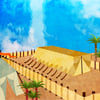
<P>As we will see, the Tabernacle was a tent-like structure comprising two chambers, an inner chamber containing the Ark of the Covenant and an outer chamber containing the Candelabrum, the Table of the Showbread, and the Inner Altar. This two-chambered structure was situated within a larger fenced-in Courtyard, where the Outer Altar and the Laver were situated.</P>
<P>Spiritually, these precincts of the Tabernacle compound and the furnishings within them allude to the states of Divine consciousness we are intended to reach and internalize as we make ourselves and our lives into a home for God. The Torah begins with the description of the highest state of consciousness and retraces, in reverse, the steps the aspiring individual follows on his or her path toward it. The order of this <I>parashah</I>, then (after the introductory section), is as follows:</P>
<P><b>a) The Tabernacle</b></P>
<P><i>a. The furnishings of the Tabernacle</i></P>
<blockquote>
<P> i. The furnishings of the inner chamber (the Ark)</P>
<P> ii. The furnishings of the outer chamber (the Table and the Candelabrum<a class="footnote_ref" href="javascript:doFootnote('16a841763');" name="footnoteRef16a841763">16</a>)</P>
</blockquote>
<P><i>b. The Tabernacle itself</i></P>
<blockquote>
<P> i. The coverings</P>
<P> ii. The walls</P>
<P> iii. The dividing veil</P>
</blockquote>
<P><b>b) The Courtyard</b></P>
<P><i>a. The furnishings of the Courtyard</i> (the Copper Altar<a class="footnote_ref" href="javascript:doFootnote('17a841763');" name="footnoteRef17a841763">17</a>)</P>
<P><i>b. The Courtyard itself</i></P>
<P>With regard to both the Tabernacle and the Courtyard, the furnishings are treated first, and only then the surrounding structure. Thus, the order here is clearly a descending one, proceeding outward from the inner point of Divine consciousness.</P>
<hr width="30%" noshade size="2" align="center">
<P>The principle tools we use to construct our inner Tabernacle are our study of the Torah and our observance of its commandments. The furnishings of the Tabernacle allude to the Torah, the soul's "nourishment," which sustains it and allows it to grow and develop, while the walls and coverings of the Tabernacle allude to the commandments, the soul's "garments," which allow it to express itself and creatively transform the world.</P>
<P>Specifically, the Ark housed the Tablets of the Covenant, the microcosm of the Torah; the Table displayed the showbread, alluding to the nourishing quality of the Torah;<a class="footnote_ref" href="javascript:doFootnote('18a841763');" name="footnoteRef18a841763">18</a> and the Candelabrum spread light, which is a metaphor for the Torah,<a class="footnote_ref" href="javascript:doFootnote('19a841763');" name="footnoteRef19a841763">19</a> the source of enlightenment.<a class="footnote_ref" href="javascript:doFootnote('20a841763');" name="footnoteRef20a841763">20</a></P>
<DIV style="border-style: solid; border-width: 2px; padding:10px;">
<P align="center" style="font-weight: bold">INNER DIMENSIONS</P>
<P><B>[8] They shall make Me a Sanctuary:</B> God creates the world by gradually reducing the extent to which He manifests Himself. This process produces a descending series of spiritual realms ("worlds," in the terminology of Kabbalah), which are intermediate realities, or levels of Divine consciousness, between God's essence and our physical world. In general, there are four worlds: Emanation (<I>Atzilut</I>), Creation (<I>Beriah</I>), Formation (<I>Yetzirah</I>), and Action (<I>Asiyah</I>).</P>
<P>The intellect (the <I>chochmah</I>, <I>binah</I>, and <I>da'at</I>) of each world is the Torah of that world. Inasmuch as each world is designed according to how God's intellect is manifest in it, the Torah of each world is thus the "blueprint" of that world. In contrast, the actual creatures that populate each world (i.e., the various orders of angels, etc.) are created when the intellect (or Torah) of that world descends into the <I>malchut</I> of that world. <I>Malchut</I> is the <I>sefirah</I> through which God manifests Himself as a "king," and since a king cannot be a king without a kingdom, <I>malchut</I> produces God's subjects in each world, the creatures that populate it.</P>
<P>When the Torah of any particular world descends into that world's <I>malchut</I>, it becomes hidden within it. In <I>malchut</I>, the Torah no longer appears as God's intellect; rather, it functions as the unseen "nature" of that world. God thus becomes hidden within His creation.</P>
<P>If we take each world as a macrocosm of the Tabernacle, the "inner chamber" or "Holy of Holies" of each world is the intellect of that world, its <I>chochmah</I>, <I>binah</I>, and <I>da'at</I>. In the Holy of Holies, the Torah shines as itself—not as it is processed into creative energy through <I>malchut</I>—and God's presence is felt. While God is <I>hidden</I> in each world within the nature of that world, He is <I>revealed </I>in each world within the Torah of that world.</P>
<P>But although the Torah remains <I>essentially</I> unchanged as it descends from one world to the next, it is projected differently onto the screens of these worlds. Thus, although the Torah of <I>Yetzirah</I>, for example, is a greater revelation of God's presence than the "nature" (the <I>malchut</I>) of <I>Yetzirah</I>, it is still tailored to the mentality of the world of <I>Yetzirah</I>. In the basic scheme of creation, no world experiences a revelation of the Torah—and therefore any consciousness of God—that is not endemic to that world. If it would, this would be unnatural, supernatural, <I>miraculous</I>, in the context of that world. Therefore, each world is "locked," so to speak, in the Divinely-ordained parameters of its "natural" or "native" God-consciousness.</P>
<P>The exception to this was the Tabernacle (and later the Temple) of our physical world. The Divine consciousness that existed inside the Holy of Holies of the Tabernacle was <I>not</I> "processed" through the cascading descent of creation. Inasmuch as the tablets embodied the entire Torah, they directly expressed the <I>chochmah</I> of the world of <I>Atzilut</I>, i.e., God's intellect as it is manifest in the world of <I>Atzilut.</I> The level of Divine consciousness present in the Holy of Holies was thus that of the intellect of the world of <I>Atzilut</I>.</P>
<P>However, in order for the Ten Commandments (and implicit within them, the entire Torah) to be <I>engraved</I> upon physical tablets, the Divine energy of the world of <I>Atzilut</I> had to be somewhat reduced. The Torah of the world of <I>Atzilut</I> is totally one with God and is therefore too abstract to be manifest physically. Therefore, the intellect of <I>Atzilut</I> passed through <I>malchut</I> of <I>Atzilut</I> and was revealed within the intellect of <I>Beriah</I>. <I>Beriah</I> is the beginning of self-awareness and seemingly independent existence, so once the revelation had reached this point, it could shine directly into the physical Tabernacle, resulting in the Ten Commandments being engraved on the physical tablets.</P>
<P>Thus, the revelation of Divinity in the Holy of Holies bypassed the worlds of <I>Yetzirah</I> and <I>Asiyah</I>. Although these worlds are spiritual worlds—and are therefore beyond our world's limitations of time and space—they define the spiritual antecedents of what we know as time and space. The world of <I>Yetzirah</I> expresses the six emotions (<I>chesed</I> to <I>yesod</I>) of <I>Atzilut</I>, which define the six directions of spiritual "proto-space." The world of <I>Asiyah</I> expresses the <I>sefirah</I> of <I>malchut</I> of <I>Atzilut</I>, the source of time, and "action" implies a sequence of events, or "proto-time."</P>
<P>Because the revelation bypassed these two worlds, the Ark and the tablets miraculously transcended time and space: the Ark simultaneously occupied and did not occupy space, and the inside of the <I>samech</I> and final <I>mem</I> of the tablets were suspended in midair.<a class="footnote_ref" href="javascript:doFootnote('21a841763');" name="footnoteRef21a841763">21</a> </P>
</DIV>
<DIV style="border-style: solid; border-width: 2px; padding:10px;">
<P align="center" style="font-weight: bold">A CLOSER LOOK</P>
<P><B>[8] They shall make Me a Sanctuary:</B> When the people donated the raw materials for the Tabernacle, they were required to do so with the intention that these materials be used for holy purposes. This intention served to transfer the materials from the donor's ownership to God's ownership, so to speak. When the artisans then fashioned the Tabernacle from the raw materials, <I>they </I>were required to do so with the additional intention of transforming these materials from mundane into holy objects.<a class="footnote_ref" href="javascript:doFootnote('22a841763');" name="footnoteRef22a841763">22</a></P>
</DIV>
<P><B>[10] </B><B>They shall make an Ark: </B>The highest level of Divine consciousness—that of total unity with God—is embodied in the inner chamber and its Ark of the Covenant. The Ark housed the Tablets of the Covenant, on which were engraved the Ten Commandments, which encapsulated the entire Torah. Eventually, a Torah scroll was placed inside the Ark, as well. This teaches us that a person can achieve this degree of intense unity with God only through Torah study. Specifically, it is the study of the inner dimension of the Torah—Kabbalah and Chasidic teachings—that enables a person to reach this level of consciousness.</P>
<P>This aspect of the Torah is alluded to by the two engraved tablets. When words are written <I>on</I> a certain material—parchment, for example—the ink and parchment remain two separate entities; the ink can be scraped off. Engraving, on the other hand, is a much more intrinsic unity; the word and the medium become one.</P>
<P>For this reason, the inner dimension of the Torah is called "the tree of life"<a class="footnote_ref" href="javascript:doFootnote('23a841763');" name="footnoteRef23a841763">23</a> ("life" meaning submersion in God-consciousness), whereas the exoteric facet of Torah (<I>nigleh</I>), if learned for egocentric purposes, can become "an elixir of death"<a class="footnote_ref" href="javascript:doFootnote('24a841763');" name="footnoteRef24a841763">24</a> ("death" meaning submersion in self-consciousness). This is further alluded to by the fact that the tablets could be read from either side; they had no "back."<a class="footnote_ref" href="javascript:doFootnote('25a841763');" name="footnoteRef25a841763">25</a> In the imagery of Kabbalah, the back of an entity signifies the aspect of it vulnerable to attack and subsequent collapse.</P>
<P>Once we are engaged in the study of the Torah's inner dimension, our study of the rest of Torah can becomes permeated with union with God.<a class="footnote_ref" href="javascript:doFootnote('26a841763');" name="footnoteRef26a841763">26</a> This is alluded to by the presence of the Torah scroll (which indicates the exoteric aspect of the Torah) in the Ark as well.<a class="footnote_ref" href="javascript:doFootnote('27a841763');" name="footnoteRef27a841763">27</a> </P>
<P>According to the Talmud,<a class="footnote_ref" href="javascript:doFootnote('28a841763');" name="footnoteRef28a841763">28</a> the Ark contained both the second set of tablets as well as the broken remains of the first set. The first tablets (before they were broken) represent the Jew in his pristine state at Sinai, prior to the sin of the Golden Calf. The second tablets, which were given on Yom Kippur after the Jews had been forgiven for their sin, represent the Jew that has strayed and then returned to the Ark of Torah. There is also a third Jew, one who lacks the purity of the first tablets but who has not yet returned to the path of the Torah sufficiently to deserve receiving the second tablets. He, too, is represented in the Ark—in the broken pieces of the first tablets. Even when we are shattered and broken, we are worthy of a place in the Ark.<a class="footnote_ref" href="javascript:doFootnote('29a841763');" name="footnoteRef29a841763">29</a></P>
<P><B>Two and a half cubits long, one and a half cubits wide, and one and a half cubits high:</B> Unlike the other furnishings of the Tabernacle, the dimensions of the Ark were all incomplete units. Inasmuch as the Ark housed the Torah, this alludes to the idea that the Torah must "break" us; it must be learned in such a way that it breaks our ingrained habits and negative personality traits.<a class="footnote_ref" href="javascript:doFootnote('30a841763');" name="footnoteRef30a841763">30</a></P>
<P><B>[15] They may not be removed:</B> One reason given for this prohibition is that if, at some point, it would be necessary to depart with the Ark hurriedly and there were no designated rods, there would not be time to search for rods strong enough to bear the Ark's weight. Permanently installed rods would preclude this concern.<a class="footnote_ref" href="javascript:doFootnote('31a841763');" name="footnoteRef31a841763">31</a></P>
<P>The Ark housed the tablets, which represent the Torah. When a person immerses himself in the study of the Torah, he has "entered the Ark." One may think: "While I study Torah, I must focus entirely on it and distance myself from anything else. The needs of another person cannot concern me at this time." The message of the permanent rods is that an Ark must always be ready to travel. Even when the Ark is in the Holy of Holies, the holiest place in the world, it must be ready to hurriedly travel to a place in need of its light.<a class="footnote_ref" href="javascript:doFootnote('32a841763');" name="footnoteRef32a841763">32</a></P>
<P><B>[17] You shall make a Cover:</B> As mentioned above,<a class="footnote_ref" href="javascript:doFootnote('33a841763');" name="footnoteRef33a841763">33</a> the tablets housed in the Ark signify the union with God we achieve by studying the Torah, particularly its inner dimension. The Cover of the Ark signifies that, even if we are studying the Torah's inner dimension, we must still never lose sight of the fact that we require God's grace from above at all times in order to maintain Divine consciousness. God grants us this assistance in virtue of our intrinsic connection to Him, which transcends whatever connection we may forge through the study and observance of the Torah. </P>
<P>Protruding upward from the Ark-cover were the two cherubim, facing each other. Their face-to-face posture signified that, through learning Torah, we can transcend the Torah and ascend to our soul-root, allowing our consciousness to merge totally with God.<a class="footnote_ref" href="javascript:doFootnote('34a841763');" name="footnoteRef34a841763">34</a> </P>
<P>The infant-like faces of the cherubim signified that our intrinsic bond with God is akin to the essential bond between parent and child, which can never be sundered, despite any temporal fluctuations in their relationship.</P>
<P>This intrinsic bond is also alluded to by the fact that word for "Cover" (<I>kaporet</I>) is related to the word for "atonement" (<I>kaparah</I>). Atonement for sin is possible only when we invoke and evoke God's essential love for us, which overrides the deficiencies in our relationship to Him we cause when we disobey the Torah's instructions.<a class="footnote_ref" href="javascript:doFootnote('35a841763');" name="footnoteRef35a841763">35</a></P>
<P><B>[18] You shall make two golden cherubim:</B> The infant face of the cherubim also alludes to the fact that the Torah as we know it is a reduced, simplified version of the heavenly Torah, God's infinite wisdom. God contracted His infinite wisdom into a form we can understand and digest, much as an expert teacher has to contract his grasp of a subject in order to convey it to his pupils.<a class="footnote_ref" href="javascript:doFootnote('36a841763');" name="footnoteRef36a841763">36</a></P>
<P>The fact that the cherubim's wings were spread protectively over the Ark alludes to the fact that the Torah-education of little children ensures the preservation and continuity of the transmission of the Torah. This recalls how, before the Giving of the Torah,<a class="footnote_ref" href="javascript:doFootnote('37a841763');" name="footnoteRef37a841763">37</a> God accepted only the children as guarantors that the people would uphold the Torah.<a class="footnote_ref" href="javascript:doFootnote('38a841763');" name="footnoteRef38a841763">38</a></P>
<P><B>[23] You shall make a Table:</B> The three furnishings of the outer chamber of the Tabernacle (the Candelabrum, the Table, and the Inner Altar) signified the three components of the intellect. We are intended to use our intellect primarily to forge, enhance, and deepen our connection with God and His purposes in creating the world. Specifically, the Table signifies <I>binah</I> ("understanding"), the second component of the intellect, which processes new insight (<I>chochmah</I>), analyzes it, and integrates it into our already-existing mental picture of reality. Metaphorically, then, <I>binah</I> transforms the brilliant but ephemeral insight into solid, substantial fare that we can "digest" and be nourished from. It is in this sense that it is signified by the Table and the bread placed on it.</P>
<P>The Table's placement in the north side of the outer chamber also alluded to its identification with the <I>sefirah</I> of <I>binah</I>: looking outward from the inner chamber, it was on the left, and <I>binah</I> is the primary <I>sefirah</I> of the left axis of the <I>sefirot</I>.<a class="footnote_ref" href="javascript:doFootnote('39a841763');" name="footnoteRef39a841763">39</a></P>
<P><B>[31] You shall make a Candelabrum: </B>The Candelabrum, the source of light, signified <I>chochmah</I> ("wisdom"), the faculty of insight and enlightenment. The sudden and elusive manifestation of <I>chochmah</I> in the mind is similar to a bolt of lighting flashing across a dark sky.</P>
<P>The candelabrum was situated in the south side of the outer chamber; looking outward from the inner chamber, it was on the right. <I>Chochmah</I> is the primary <I>sefirah</I> of the right axis of the <I>sefirot</I>.<a class="footnote_ref" href="javascript:doFootnote('40a841763');" name="footnoteRef40a841763">40</a> </P>
<hr width="30%" noshade size="2" align="center">
<P>Every Divine soul is a source of Divine illumination; it is in this sense that the soul is metaphorically termed "the lamp of God."<a class="footnote_ref" href="javascript:doFootnote('41a841763');" name="footnoteRef41a841763">41</a> The seven lamps of the Candelabrum signify the seven basic types of souls, each having its particular path in revealing Divinity based on one of the seven basic emotions:<a class="footnote_ref" href="javascript:doFootnote('42a841763');" name="footnoteRef42a841763">42</a></P>
<div align="center" class="imagetable w96 margin05 widen" width="450" >
<img src="https://w2.chabad.org/media/images/270/NDvH2704089.jpg?_i=_nD6C4982354E8EEFCEA38DC71D819F450" itemprop="image" srcset="https://w2.chabad.org/media/images/270/NDvH2704089.jpg?_i=_nD6C4982354E8EEFCEA38DC71D819F450 450w" sizes="(min-width: 768px) 450px, 100vw" />
</div>
<P><B>[31-32] Its stem, its goblets, its spheres, and its flowers…. Six branches shall extend from the sides:</B> The stem of the Candelabrum alludes to the Written Torah, and the six branches that extend from it allude to the six orders of the Mishnah, the basic compendium of the Oral Torah. In this context, the spheres and flowers allude to the extra-mishnaic teachings of the sages. The goblets allude to the Torah's "wine," its inner dimension.<a class="footnote_ref" href="javascript:doFootnote('43a841763');" name="footnoteRef43a841763">43</a> </P>
<P><B>[40] It was still too complicated:</B> What Moses really found difficult to comprehend about the Candelabrum was how such a physical object could to spread the light of Divine consciousness to the outside world. God confirmed Moses' hesitations and declared that indeed, using physical objects to disseminate Divine awareness is impossible for us to do on our own. He therefore told Moses to cast the gold into the fire and that the Candelabrum would take form by itself.</P>
<P>Similarly, God requires us to transform all our material pursuits and possessions into sources of Divine light, but He also knows that we cannot do this on our own. All He asks is that we cast it all into the fire of our hearts—i.e., to let our love for Him permeate all we do—and He will do the rest.<a class="footnote_ref" href="javascript:doFootnote('44a841763');" name="footnoteRef44a841763">44</a></P>
<H2>Chapter 26</H2>
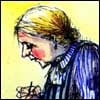
<P><B>[1] Linen, turquoise wool,</B> <B>purple wool, and scarlet wool:</B> These four types of thread allude to the four bases of our emotional relationship with God.</P>
<div align="Right" class="imagetable right widen" width="283" >
<img src="https://w2.chabad.org/media/images/270/npvc2704108.jpg?_i=_nF8765E02716CB6E5153AD6A50454DD1B" srcset="https://w2.chabad.org/media/images/270/npvc2704108.jpg?_i=_nF8765E02716CB6E5153AD6A50454DD1B 283w" sizes="(min-width: 768px) 283px, 100vw" loading="lazy" />
</div>
<P><I>Scarlet wool</I> is red, and therefore alludes to fire. The fire within our soul is the ardent love of God that results from contemplating His transcendent infinity. When we realize the extent to which God transcends creation and that He is the true reality, we are overcome with a fiery, passionate desire to escape the limitations of the world in order to know Him and merge with Him.</P>
<P><I>Turquoise wool</I> is the color of the sky, and alludes to our experience of God's majesty. In this experience, we also contemplate God's transcendent infinity, but focus on our own insignificance in comparison. This fills us with feelings of awe.</P>
<P><I>Purple wool</I> is a blend of blue and red, of love and awe. It therefore alludes to pity, an emotion compounded of feelings of love and anger: love for the ideal, anger over how the ideal goes unfulfilled. Specifically, we pity our Divine soul when we consider its plight, having to live so spiritually distant from its natural home.</P>
<P><I>Linen</I> is white, and therefore alludes to the soul's basic, essential love of God, which transcends reason. This love is what makes us capable of self-sacrifice for God's honor, inasmuch as it expresses our unassailable bond with God.<a class="footnote_ref" href="javascript:doFootnote('45a841763');" name="footnoteRef45a841763">45</a></P>
<P><B>[15] Acacia wood…placed vertically:</B> The Hebrew word for "acacia" (<I>shitah</I>) means "bending." The acacia tree is called the "bending" tree because it tends to spread or bend to the side as it grows, rather than growing straight up. The word for "foolishness" (<I>shetut</I>) is another form of this word; foolishness maybe considered an act of "bending" from the path dictated by logic.</P>
<P>Foolishness can be either holy or holy. Unholy foolishness is the illogical thinking that leads us to go against God's will. Holy foolishness is our willingness to go beyond the strict requirements of the Torah in fulfilling our Divine mission or in refining ourselves.</P>
<P>Allegorically, then, placing the "bending" acacia planks <I>vertically</I> means using our power to be "foolish" for holy purposes. We can thereby turn this often negative character trait into a positive force in our lives, enabling us to reach levels of dedication to God and union with Him that we would not be able to reach otherwise.<a class="footnote_ref" href="javascript:doFootnote('46a841763');" name="footnoteRef46a841763">46</a></P>
<P><B>[19] Silver bases:</B> As we have seen,<a class="footnote_ref" href="javascript:doFootnote('47a841763');" name="footnoteRef47a841763">47</a> the bases were made out of the silver collected in the half-shekel tax, which was the same for everyone, whereas the rest of the Tabernacle's components were made out of the materials that everyone donated according to their individual ability and desire to give.</P>
<P>The reason for this distinction is that the bases were the foundation of the Tabernacle, which kept the whole structure standing firmly. The other components of the Tabernacle allegorically signify the aspects of our personalities that differ from person to person: the planks were ten cubits high, corresponding to the three facets of the intellect and the seven emotions, and the coverings allude to the enveloping powers of will and delight. The bases, in contrast, allude to our ability to enforce the Torah's code of behavior upon ourselves. This is certainly the lowest rung on the ladder of self-refinement, since it is merely an act of discipline, devoid of any feeling or intellect. Nonetheless, it is the foundation of the rest of the character-structure we build out of our lives, for without this basic commitment to carry out God's will, the higher levels of our personalities will lack stability and strength.</P>
<P>Inasmuch as the norms of religious behavior ensured by self-imposed discipline are the same for everyone, the bases were made out of the one contribution everyone gave equally. In contrast, we all relate to God <I>differently</I> via our delight, will, intellect, and emotions, so the components of the Tabernacle that allude to these aspects of our personalities were made out of the contributions the people gave according to their individual means and desires.<a class="footnote_ref" href="javascript:doFootnote('48a841763');" name="footnoteRef48a841763">48</a></P>
<P><B>[33] The Curtain will separate for you between the Sanctuary and the Holy of Holies:</B> As will be explained further on, the Courtyard signifies the stage in our spiritual development in which we work on renouncing and sublimating our animal nature, while the Tabernacle proper signifies the stage in which we achieve Divine consciousness. We enter the Tabernacle's outer chamber in order to begin to orient our consciousness towards Divinity, and thereby align ourselves with our Divine soul. Although, like the animal soul, the Divine soul comprises both intellectual and emotional attributes, it is primarily governed by its intellect, while the animal soul is primarily governed by its emotions. Therefore, as was explained above,<a class="footnote_ref" href="javascript:doFootnote('49a841763');" name="footnoteRef49a841763">49</a> the three furnishings found in the outer chamber signify the three facets of the intellect.</P>
<P>Once we have realigned our consciousness with that of our Divine soul, we can proceed to the next rung of consciousness, the supra-rational. This is the consciousness of the inner chamber and the Ark contained within it.<a class="footnote_ref" href="javascript:doFootnote('50a841763');" name="footnoteRef50a841763">50</a> The area of the inner chamber was ten cubits square and (like the rest of the Tabernacle) the inner chamber was ten cubits high. Inasmuch as the number ten signifies the complete array of all ten <I>sefirot</I> and/or soul-powers, ten cubed signifies this complete array as manifest in all facets (i.e., dimensions) of our consciousness or reality.<a class="footnote_ref" href="javascript:doFootnote('51a841763');" name="footnoteRef51a841763">51</a> At this level, we and our ten soul-powers are totally engulfed in Divine consciousness. We have reached the level described in the liturgy<a class="footnote_ref" href="javascript:doFootnote('52a841763');" name="footnoteRef52a841763">52</a> as being "one with Your Oneness."<a class="footnote_ref" href="javascript:doFootnote('53a841763');" name="footnoteRef53a841763">53</a></P>
<H2>Chapter 27</H2>
<P><B>[1] You shall make the Altar:</B> The Outer Altar was used for offering animal sacrifices. Animal sacrifices allude to the sublimation of our animal soul. Three types of animals could be offered on the Altar—oxen, sheep, and goats. These allude to the three varieties of animal soul: The ox corresponds to the confrontational type, who is always seeking to oppose the directives of the Divine soul. The sheep corresponds to the conformist-type, who follows the crowd and is too weak to assert his Divine nature if it entails going against the tide. The goat corresponds to the stubborn type, who brazenly refuses to budge from the preconceived notions inculcated into him by his animal soul.</P>
<P>Slaughtering the animal alludes, of course, to how we slaughter—i.e., renounce—our animalistic orientation toward life. Sprinkling the blood and placing the fat of the slaughtered animal on the Altar alludes to how we re-orient our enthusiasm (warm blood) and sense of delight (fat) to Godliness. Burning the animal by fire on the Altar alludes to the consumption of our animal nature by Divinity.</P>
<P>The Altar for animal sacrifices was situated outside the Tabernacle itself, in the Courtyard, indicating that sublimation of the animal nature is prerequisite to entrance into the realm of holiness and Divine consciousness embodied in the Tabernacle itself.<a class="footnote_ref" href="javascript:doFootnote('54a841763');" name="footnoteRef54a841763">54</a> When we enter the Tabernacle, we encounter the three furnishings that allude to the process of rectifying the three components of our intellect: the Candelabrum, signifying <I>chochmah</I>;<a class="footnote_ref" href="javascript:doFootnote('55a841763');" name="footnoteRef55a841763">55</a> the Table, signifying <I>binah</I>;<a class="footnote_ref" href="javascript:doFootnote('56a841763');" name="footnoteRef56a841763">56</a> and the Inner Altar, signifying <I>da'at</I> and <I>keter</I>.<a class="footnote_ref" href="javascript:doFootnote('57a841763');" name="footnoteRef57a841763">57</a> </P>
<P><B>[8] You shall make a hollow structure:</B> As mentioned above, the Outer Altar alludes to the process of refining our animal natures. The material and form of the Outer Altar allude to the two opposite attitudes we need to cultivate in order to accomplish this.</P>
<P>On the one hand, we must be resolute in our dedication to spiritual advancement. The Jews are called "a stiff-necked people";<a class="footnote_ref" href="javascript:doFootnote('58a841763');" name="footnoteRef58a841763">58</a> this can be a positive quality if expressed as determination and obstinacy in realizing spiritual goals. This quality is alluded to by the fact that the Altar was made of copper, the word for which (<I>nechoshet</I>) is related to the word for brazen (<I>nechush</I>) stubbornness.<a class="footnote_ref" href="javascript:doFootnote('59a841763');" name="footnoteRef59a841763">59</a></P>
<P>On the other hand, the hollow Altar was filled with dirt.<a class="footnote_ref" href="javascript:doFootnote('60a841763');" name="footnoteRef60a841763">60</a> So, while we must be externally stubborn, we must be internally humble as dirt. As we say in our prayers,<a class="footnote_ref" href="javascript:doFootnote('61a841763');" name="footnoteRef61a841763">61</a> "and may my soul be as dust to all."<a class="footnote_ref" href="javascript:doFootnote('62a841763');" name="footnoteRef62a841763">62</a> </P>
<P><B>[9] Crocheted hangings made of twined linen: </B>These hangings were made of linen because flax, from which linen is made, differs from other plants in that only a single stalk grows from each seed.<a class="footnote_ref" href="javascript:doFootnote('63a841763');" name="footnoteRef63a841763">63</a> One of the words for "linen" in biblical Hebrew (<I>bad</I>) reflects this attribute, since it also means "alone." Since the Jew is distinguished from other nations by virtue of his absolute monotheism, it is appropriate that the curtain separating the Tabernacle from the surrounding world was made of this material.<a class="footnote_ref" href="javascript:doFootnote('64a841763');" name="footnoteRef64a841763">64</a></P>
<P>In addition, the flax plant alludes to our mission to spread of the knowledge of God's oneness to the world at large. Our sages tell us that "flax depletes the land [i.e., the soil of its nutrients],"<a class="footnote_ref" href="javascript:doFootnote('65a841763');" name="footnoteRef65a841763">65</a> and "land" signifies the earthly, materialistic consciousness that opposes the faith in one God. This is the mystical meaning of the phrase "a single people in the <I>land</I>,"<a class="footnote_ref" href="javascript:doFootnote('66a841763');" name="footnoteRef66a841763">66</a> which is used to describe the Jews: they are a people who bring awareness of God's oneness to the materialistic world.<a class="footnote_ref" href="javascript:doFootnote('67a841763');" name="footnoteRef67a841763">67</a></P>
<P><B>[18] The height</B> <B>shall be five cubits:</B> Although Rashi adopts the opinion that the Outer Altar was ten cubits high, according to another opinion it was only three cubits high. In this context, the Talmud records an opinion that the reason the hangings were five cubits high was so the people standing outside the Courtyard would not be able to see the priest officiating on top of the Altar.<a class="footnote_ref" href="javascript:doFootnote('68a841763');" name="footnoteRef68a841763">68</a> However, the Talmud also records an opinion that Moses was ten cubits tall;<a class="footnote_ref" href="javascript:doFootnote('69a841763');" name="footnoteRef69a841763">69</a> so, in this view, although the hangings hid the priest from the people, they only hid the lower half of Moses' body.</P>
<P>Although the people fashioned the components of the Tabernacle, it was Moses who actually erected it.<a class="footnote_ref" href="javascript:doFootnote('70a841763');" name="footnoteRef70a841763">70</a> Similarly, with regard to the spiritual Tabernacle we build for God out of our own lives, it is our inner Moses that actually erects it, that unique capacity we each possess to know God directly, regardless of the limitations of our human intellect.<a class="footnote_ref" href="javascript:doFootnote('71a841763');" name="footnoteRef71a841763">71</a> It is only by tapping this aspect of our souls and relating to God in this way that we can construct a sanctuary for Him, a realm within our consciousness which we can enter to renew our awareness of His oneness.</P>
<P>Allegorically, Moses' height of ten cubits signifies the fact that he (and the spark of Moses within each of us) constructs the Tabernacle out of all ten powers of the soul. Our intrinsic connection to God—our inner Moses—is manifest through our learning the Torah and performing its commandments. Our sages state<a class="footnote_ref" href="javascript:doFootnote('72a841763');" name="footnoteRef72a841763">72</a> that the holiness of the Torah protects us from our evil inclination (<I>yetzer hara</I>) while we are studying it. Therefore, while studying Torah, we do not need a "curtain" to separate us from the world. In contrast, performing the commandments does not protect us from our evil inclination. Simply stated, this is because Torah-study presupposes that we, the students, are absorbed in understanding what we are studying, and our mind is thus engrossed in holiness. Commandments, on the other hand, are primarily physical acts, and thus leave our thoughts open to diversion.</P>
<P>Thus, Torah-study is alluded to by the five visible upper cubits of Moses' body, and commandment-performance by the lower five cubits, which were concealed from view by the linen curtains.<a class="footnote_ref" href="javascript:doFootnote('73a841763');" name="footnoteRef73a841763">73</a></P>
<P><B>[19] The stakes for the Courtyard:</B> Rashi suggests the possibility that the stakes were not actually hammered into the ground but rather simply held the curtains in place by their weight. Nonetheless, he feels that the evidence indicates that they were indeed imbedded into the ground.</P>
<P>If the stakes only acted as weights, the connection between the Tabernacle and the ground it stood on was merely coincidental, but if the stakes were implanted in the ground, it means that the holiness of the Tabernacle actually permeated the ground. The Torah describes later how the ground under the Tabernacle was actually used as part of a religious rite.<a class="footnote_ref" href="javascript:doFootnote('74a841763');" name="footnoteRef74a841763">74</a></P>
<P>In either case, the ground on which the Tabernacle stood absorbed holiness only while the Tabernacle was standing upon it. When the Tabernacle moved on, the ground reverted to its previous mundane status. Similarly, for a few days before the giving of the Torah, Mount Sinai was off limits by penalty of death. But after the Torah was given, Mount Sinai became once again freely accessible. </P>
<P>Later, with the construction of the Temple in Jerusalem, the capacity of holiness to permeate the material world went a step further. Unlike the Tabernacle, which was constructed mainly out of wood and fabric—both of the vegetable kingdom, the Holy Temples were constructed primarily from stone—a substance from the mineral kingdom. The holiness of the Temples was compelling enough to permeate even the inanimate aspects of creation. Hence the ground upon which the Temples stood remains holy even today.</P>
<P>Thus, with the building of the Temple, we have been given the power to infuse light—in a permanent and internal way—even into those places that appear to be earth: inanimate, and lifeless. The Temples of holiness that we build throughout the world can never be uprooted.<a class="footnote_ref" href="javascript:doFootnote('75a841763');" name="footnoteRef75a841763">75</a> </P>
</div>
</co:body>
</div>
<div class="break_floats"></div>
<co:footnoteTable xmlns:co="www1.chabadonline.com/alpha1" xmlns:ext="urn:xslt-extensions">
<div id="FootnoteContainer" cellspacing="0" data-lang="en">
<div class="heading">NOTES</div>
<div class="group " data-name="">
<div id="footnoteTR1a841763" class="footnote " group=""><a name="footnote1a841763" class="footnoteLink" href="#footnoteRef1a841763">1.</a><div class="footnoteBody ">
<p>See <I>Bava Metzia</I>, 44ab, commentary of Rabbeinu Asher (the <I>Rosh</I>)<I> ad loc.</I></p>
</div>
</div>
<div id="footnoteTR2a841763" class="footnote " group=""><a name="footnote2a841763" class="footnoteLink" href="#footnoteRef2a841763">2.</a><div class="footnoteBody ">
<p><I>Nachash</I> is also related to the word for "stubborn" (<I>nachush</I>).</p>
</div>
</div>
<div id="footnoteTR3a841763" class="footnote " group=""><a name="footnote3a841763" class="footnoteLink" href="#footnoteRef3a841763">3.</a><div class="footnoteBody ">
<p><I>Likutei Sichot</I>, vol. 6, pp. 157-160.</p>
</div>
</div>
<div id="footnoteTR4a841763" class="footnote " group=""><a name="footnote4a841763" class="footnoteLink" href="#footnoteRef4a841763">4.</a><div class="footnoteBody ">
<p>1 Kings 8:27.</p>
</div>
</div>
<div id="footnoteTR5a841763" class="footnote " group=""><a name="footnote5a841763" class="footnoteLink" href="#footnoteRef5a841763">5.</a><div class="footnoteBody ">
<p><I>Tanya</I>, chapters 51-53.</p>
</div>
</div>
<div id="footnoteTR6a841763" class="footnote " group=""><a name="footnote6a841763" class="footnoteLink" href="#footnoteRef6a841763">6.</a><div class="footnoteBody ">
<p><I>Bereishit Rabbah</I> 1:1.</p>
</div>
</div>
<div id="footnoteTR7a841763" class="footnote " group=""><a name="footnote7a841763" class="footnoteLink" href="#footnoteRef7a841763">7.</a><div class="footnoteBody ">
<p>Although only the high priest was allowed entry into the Holy of Holies, the doors leading into it were opened every pilgrim festival, and thus the entire nation could view this awesome phenomenon. See <I>Yoma </I>54a.</p>
</div>
</div>
<div id="footnoteTR8a841763" class="footnote " group=""><a name="footnote8a841763" class="footnoteLink" href="#footnoteRef8a841763">8.</a><div class="footnoteBody ">
<p><I>Avot d'Rabbi Nathan</I> 11:1.</p>
</div>
</div>
<div id="footnoteTR9a841763" class="footnote " group=""><a name="footnote9a841763" class="footnoteLink" href="#footnoteRef9a841763">9.</a><div class="footnoteBody ">
<p><I>Sefer HaSichot</I> 5752, vol. 2, p. 384.</p>
</div>
</div>
<div id="footnoteTR10a841763" class="footnote " group=""><a name="footnote10a841763" class="footnoteLink" href="#footnoteRef10a841763">10.</a><div class="footnoteBody ">
<p>
<P> 2:224a.</P>
</p>
</div>
</div>
<div id="footnoteTR11a841763" class="footnote " group=""><a name="footnote11a841763" class="footnoteLink" href="#footnoteRef11a841763">11.</a><div class="footnoteBody ">
<p><I>Tanchuma</I>, <I>Terumah</I> 8.</p>
</div>
</div>
<div id="footnoteTR12a841763" class="footnote " group=""><a name="footnote12a841763" class="footnoteLink" href="#footnoteRef12a841763">12.</a><div class="footnoteBody ">
<p>2:195a; Ramban, beginning of <I>Vayakheil</I>.</p>
</div>
</div>
<div id="footnoteTR13a841763" class="footnote " group=""><a name="footnote13a841763" class="footnoteLink" href="#footnoteRef13a841763">13.</a><div class="footnoteBody ">
<p><I>Likutei Sichot</I>, vol. 6, pp. 153-156. </p>
</div>
</div>
<div id="footnoteTR14a841763" class="footnote " group=""><a name="footnote14a841763" class="footnoteLink" href="#footnoteRef14a841763">14.</a><div class="footnoteBody ">
<p>This idea is quoted in <I>Shnei Luchot HaBrit</I> (<I>Sha'ar HaOtiot s.v. lamed</I>) and <I>Reishit Chochmah</I> (2:6) in the name of the sages. See Overview.</p>
</div>
</div>
<div id="footnoteTR15a841763" class="footnote " group=""><a name="footnote15a841763" class="footnoteLink" href="#footnoteRef15a841763">15.</a><div class="footnoteBody ">
<p><I>HaYom Yom</I>, 21 Tamuz.</p>
</div>
</div>
<div id="footnoteTR16a841763" class="footnote " group=""><a name="footnote16a841763" class="footnoteLink" href="#footnoteRef16a841763">16.</a><div class="footnoteBody ">
<p> The Inner Altar is described in the following <I>parashah</I>, <I>Tetzaveh.</I></p>
</div>
</div>
<div id="footnoteTR17a841763" class="footnote " group=""><a name="footnote17a841763" class="footnoteLink" href="#footnoteRef17a841763">17.</a><div class="footnoteBody ">
<p>The Laver is described in the <I>parashah</I> after the following one, <I>Ki Tisa</I>.</p>
</div>
</div>
<div id="footnoteTR18a841763" class="footnote " group=""><a name="footnote18a841763" class="footnoteLink" href="#footnoteRef18a841763">18.</a><div class="footnoteBody ">
<p>Proverbs 9:5.</p>
</div>
</div>
<div id="footnoteTR19a841763" class="footnote " group=""><a name="footnote19a841763" class="footnoteLink" href="#footnoteRef19a841763">19.</a><div class="footnoteBody ">
<p> Proverbs 6:23.</p>
</div>
</div>
<div id="footnoteTR20a841763" class="footnote " group=""><a name="footnote20a841763" class="footnoteLink" href="#footnoteRef20a841763">20.</a><div class="footnoteBody ">
<p><I>Torah Or</I> 88bc.</p>
</div>
</div>
<div id="footnoteTR21a841763" class="footnote " group=""><a name="footnote21a841763" class="footnoteLink" href="#footnoteRef21a841763">21.</a><div class="footnoteBody ">
<p>Based on <I>Tanya</I>, chapters 51-53, and the Rebbe's note to the beginning of chapter 53 printed in R. Y. Weinberg, <I>Lessons in Tanya</I>, and in R. Y. Korf, <I>Likutei Biurim beSefer HaTanya</I>, vol. 1, p. 303.</p>
</div>
</div>
<div id="footnoteTR22a841763" class="footnote " group=""><a name="footnote22a841763" class="footnoteLink" href="#footnoteRef22a841763">22.</a><div class="footnoteBody ">
<p><I>Likutei Sichot</I>, vol. 26, pp. 172-173.</p>
</div>
</div>
<div id="footnoteTR23a841763" class="footnote " group=""><a name="footnote23a841763" class="footnoteLink" href="#footnoteRef23a841763">23.</a><div class="footnoteBody ">
<p><I>Igeret HaKodesh</I> 26; Introduction to <I>Biurei HaZohar</I>.</p>
</div>
</div>
<div id="footnoteTR24a841763" class="footnote " group=""><a name="footnote24a841763" class="footnoteLink" href="#footnoteRef24a841763">24.</a><div class="footnoteBody ">
<p><I>Yoma </I>72b.</p>
</div>
</div>
<div id="footnoteTR25a841763" class="footnote " group=""><a name="footnote25a841763" class="footnoteLink" href="#footnoteRef25a841763">25.</a><div class="footnoteBody ">
<p>See <I>Kuntres Acharon</I> 161a; <I>Likutei Torah</I> 3:18c, etc.</p>
</div>
</div>
<div id="footnoteTR26a841763" class="footnote " group=""><a name="footnote26a841763" class="footnoteLink" href="#footnoteRef26a841763">26.</a><div class="footnoteBody ">
<p>See at length, <I>Kuntres Eitz Chaim</I>, chapters 11ff.</p>
</div>
</div>
<div id="footnoteTR27a841763" class="footnote " group=""><a name="footnote27a841763" class="footnoteLink" href="#footnoteRef27a841763">27.</a><div class="footnoteBody ">
<p><I>Reshimot</I> 108.</p>
</div>
</div>
<div id="footnoteTR28a841763" class="footnote " group=""><a name="footnote28a841763" class="footnoteLink" href="#footnoteRef28a841763">28.</a><div class="footnoteBody ">
<p><I>Bava Batra</I> 14a. Rashi (on Numbers 10:33) rejects this opinion in favor of that of the <I>Sifrei</I> (<I>Behaalotecha</I> 24), where it is stated that the broken tablets were placed in a different ark, which served as a "scout" for the Jews in their trek in the desert and that they took with them when they went out to battle.</p>
</div>
</div>
<div id="footnoteTR29a841763" class="footnote " group=""><a name="footnote29a841763" class="footnoteLink" href="#footnoteRef29a841763">29.</a><div class="footnoteBody ">
<p><I>Likutei Sichot</I>, vol. 6, p. 156. </p>
</div>
</div>
<div id="footnoteTR30a841763" class="footnote " group=""><a name="footnote30a841763" class="footnoteLink" href="#footnoteRef30a841763">30.</a><div class="footnoteBody ">
<p><I>Sefer HaMa'amarim Kuntresim</I>, vol. 1, p. 318.</p>
</div>
</div>
<div id="footnoteTR31a841763" class="footnote " group=""><a name="footnote31a841763" class="footnoteLink" href="#footnoteRef31a841763">31.</a><div class="footnoteBody ">
<p><I>Sefer HaChinuch </I>96.</p>
</div>
</div>
<div id="footnoteTR32a841763" class="footnote " group=""><a name="footnote32a841763" class="footnoteLink" href="#footnoteRef32a841763">32.</a><div class="footnoteBody ">
<p><I>Likutei Sichot</I>, vol., 16, p. 334.</p>
</div>
</div>
<div id="footnoteTR33a841763" class="footnote " group=""><a name="footnote33a841763" class="footnoteLink" href="#footnoteRef33a841763">33.</a><div class="footnoteBody ">
<p>On v. 10.</p>
</div>
</div>
<div id="footnoteTR34a841763" class="footnote " group=""><a name="footnote34a841763" class="footnoteLink" href="#footnoteRef34a841763">34.</a><div class="footnoteBody ">
<p><I>Reshimot</I> 108.</p>
</div>
</div>
<div id="footnoteTR35a841763" class="footnote " group=""><a name="footnote35a841763" class="footnoteLink" href="#footnoteRef35a841763">35.</a><div class="footnoteBody ">
<p><I>Likutei Sichot</I>, vol. 26, pp. 180-182.</p>
</div>
</div>
<div id="footnoteTR36a841763" class="footnote " group=""><a name="footnote36a841763" class="footnoteLink" href="#footnoteRef36a841763">36.</a><div class="footnoteBody ">
<p><I>Torah Or</I> 79d.</p>
</div>
</div>
<div id="footnoteTR37a841763" class="footnote " group=""><a name="footnote37a841763" class="footnoteLink" href="#footnoteRef37a841763">37.</a><div class="footnoteBody ">
<p>Above, on 19:17.</p>
</div>
</div>
<div id="footnoteTR38a841763" class="footnote " group=""><a name="footnote38a841763" class="footnoteLink" href="#footnoteRef38a841763">38.</a><div class="footnoteBody ">
<p><I>Sichot Kodesh 5741</I>, vol. 2, pp. 395-397.</p>
</div>
</div>
<div id="footnoteTR39a841763" class="footnote " group=""><a name="footnote39a841763" class="footnoteLink" href="#footnoteRef39a841763">39.</a><div class="footnoteBody ">
<p><I>Reshimot </I>108.</p>
</div>
</div>
<div id="footnoteTR40a841763" class="footnote " group=""><a name="footnote40a841763" class="footnoteLink" href="#footnoteRef40a841763">40.</a><div class="footnoteBody ">
<p><I>Reshimot </I>108.</p>
</div>
</div>
<div id="footnoteTR41a841763" class="footnote " group=""><a name="footnote41a841763" class="footnoteLink" href="#footnoteRef41a841763">41.</a><div class="footnoteBody ">
<p>Proverbs 20:27.</p>
</div>
</div>
<div id="footnoteTR42a841763" class="footnote " group=""><a name="footnote42a841763" class="footnoteLink" href="#footnoteRef42a841763">42.</a><div class="footnoteBody ">
<p><I>Likutei Torah</I> 3:29b.</p>
</div>
</div>
<div id="footnoteTR43a841763" class="footnote " group=""><a name="footnote43a841763" class="footnoteLink" href="#footnoteRef43a841763">43.</a><div class="footnoteBody ">
<p><I>Torah Or</I> 88b; <I>Or HaTorah</I>, <I>Shemot</I>, pp. 1491, 1486.</p>
</div>
</div>
<div id="footnoteTR44a841763" class="footnote " group=""><a name="footnote44a841763" class="footnoteLink" href="#footnoteRef44a841763">44.</a><div class="footnoteBody ">
<p><I>Likutei Sichot</I>, vol. 1, p. 174. </p>
</div>
</div>
<div id="footnoteTR45a841763" class="footnote " group=""><a name="footnote45a841763" class="footnoteLink" href="#footnoteRef45a841763">45.</a><div class="footnoteBody ">
<p><I>Sefer HaMa'amarim 5708</I>, pp. 138 ff.</p>
</div>
</div>
<div id="footnoteTR46a841763" class="footnote " group=""><a name="footnote46a841763" class="footnoteLink" href="#footnoteRef46a841763">46.</a><div class="footnoteBody ">
<p>
<P> <I>Sefer HaMa'amarim 5710</I>, p. 114.</P>
</p>
</div>
</div>
<div id="footnoteTR47a841763" class="footnote " group=""><a name="footnote47a841763" class="footnoteLink" href="#footnoteRef47a841763">47.</a><div class="footnoteBody ">
<p>
<P> Above, 25:2.</P>
</p>
</div>
</div>
<div id="footnoteTR48a841763" class="footnote " group=""><a name="footnote48a841763" class="footnoteLink" href="#footnoteRef48a841763">48.</a><div class="footnoteBody ">
<p>
<P> <I>Likutei Sichot</I>, vol. 1, pp. 162 ff. </P>
</p>
</div>
</div>
<div id="footnoteTR49a841763" class="footnote " group=""><a name="footnote49a841763" class="footnoteLink" href="#footnoteRef49a841763">49.</a><div class="footnoteBody ">
<p>
<P> On 25:23 and 25:31.</P>
</p>
</div>
</div>
<div id="footnoteTR50a841763" class="footnote " group=""><a name="footnote50a841763" class="footnoteLink" href="#footnoteRef50a841763">50.</a><div class="footnoteBody ">
<p>See above, on 25:10.</p>
</div>
</div>
<div id="footnoteTR51a841763" class="footnote " group=""><a name="footnote51a841763" class="footnoteLink" href="#footnoteRef51a841763">51.</a><div class="footnoteBody ">
<p>See <I>Sefer HaArachim</I> <I>- Chabad</I>, <I>Ma'arechet Otiot HaTorah</I>, <I>Alef</I>, pp. 89 ff, p. 96, p. 108.</p>
</div>
</div>
<div id="footnoteTR52a841763" class="footnote " group=""><a name="footnote52a841763" class="footnoteLink" href="#footnoteRef52a841763">52.</a><div class="footnoteBody ">
<p><I>Hosha'anot </I>for the third day of Sukot.</p>
</div>
</div>
<div id="footnoteTR53a841763" class="footnote " group=""><a name="footnote53a841763" class="footnoteLink" href="#footnoteRef53a841763">53.</a><div class="footnoteBody ">
<p><I>Reshimot</I> 108.</p>
</div>
</div>
<div id="footnoteTR54a841763" class="footnote " group=""><a name="footnote54a841763" class="footnoteLink" href="#footnoteRef54a841763">54.</a><div class="footnoteBody ">
<p><I>Reshimot</I> 108.</p>
</div>
</div>
<div id="footnoteTR55a841763" class="footnote " group=""><a name="footnote55a841763" class="footnoteLink" href="#footnoteRef55a841763">55.</a><div class="footnoteBody ">
<p>See above, on 25:31.</p>
</div>
</div>
<div id="footnoteTR56a841763" class="footnote " group=""><a name="footnote56a841763" class="footnoteLink" href="#footnoteRef56a841763">56.</a><div class="footnoteBody ">
<p>See above, on 25:23.</p>
</div>
</div>
<div id="footnoteTR57a841763" class="footnote " group=""><a name="footnote57a841763" class="footnoteLink" href="#footnoteRef57a841763">57.</a><div class="footnoteBody ">
<p>See below, on 30:1.</p>
</div>
</div>
<div id="footnoteTR58a841763" class="footnote " group=""><a name="footnote58a841763" class="footnoteLink" href="#footnoteRef58a841763">58.</a><div class="footnoteBody ">
<p>Below, 32:9, 33:3, 33:5, 34:9; Deuteronomy 9:6, 9:13.</p>
</div>
</div>
<div id="footnoteTR59a841763" class="footnote " group=""><a name="footnote59a841763" class="footnoteLink" href="#footnoteRef59a841763">59.</a><div class="footnoteBody ">
<p>See Isaiah 48:4.</p>
</div>
</div>
<div id="footnoteTR60a841763" class="footnote " group=""><a name="footnote60a841763" class="footnoteLink" href="#footnoteRef60a841763">60.</a><div class="footnoteBody ">
<p>Above, 20:21.</p>
</div>
</div>
<div id="footnoteTR61a841763" class="footnote " group=""><a name="footnote61a841763" class="footnoteLink" href="#footnoteRef61a841763">61.</a><div class="footnoteBody ">
<p>Following the <I>Amidah</I>.</p>
</div>
</div>
<div id="footnoteTR62a841763" class="footnote " group=""><a name="footnote62a841763" class="footnoteLink" href="#footnoteRef62a841763">62.</a><div class="footnoteBody ">
<p><I>Reshimot</I> 108.</p>
</div>
</div>
<div id="footnoteTR63a841763" class="footnote " group=""><a name="footnote63a841763" class="footnoteLink" href="#footnoteRef63a841763">63.</a><div class="footnoteBody ">
<p><I>Zevachim</I> 18b; Rashi <I>ad loc</I>.</p>
</div>
</div>
<div id="footnoteTR64a841763" class="footnote " group=""><a name="footnote64a841763" class="footnoteLink" href="#footnoteRef64a841763">64.</a><div class="footnoteBody ">
<p><I>Likutei Torah</I> 2:28b ff.</p>
</div>
</div>
<div id="footnoteTR65a841763" class="footnote " group=""><a name="footnote65a841763" class="footnoteLink" href="#footnoteRef65a841763">65.</a><div class="footnoteBody ">
<p><I>Bava Metzia</I> 109a.</p>
</div>
</div>
<div id="footnoteTR66a841763" class="footnote " group=""><a name="footnote66a841763" class="footnoteLink" href="#footnoteRef66a841763">66.</a><div class="footnoteBody ">
<p>2 Samuel 7:23, and elsewhere.</p>
</div>
</div>
<div id="footnoteTR67a841763" class="footnote " group=""><a name="footnote67a841763" class="footnoteLink" href="#footnoteRef67a841763">67.</a><div class="footnoteBody ">
<p><I>Tanya</I>, <I>Igeret HaKodesh</I> 9, etc.</p>
</div>
</div>
<div id="footnoteTR68a841763" class="footnote " group=""><a name="footnote68a841763" class="footnoteLink" href="#footnoteRef68a841763">68.</a><div class="footnoteBody ">
<p><I>Zevachim</I> 18b.</p>
</div>
</div>
<div id="footnoteTR69a841763" class="footnote " group=""><a name="footnote69a841763" class="footnoteLink" href="#footnoteRef69a841763">69.</a><div class="footnoteBody ">
<p><I>Bechorot</I> 44a.</p>
</div>
</div>
<div id="footnoteTR70a841763" class="footnote " group=""><a name="footnote70a841763" class="footnoteLink" href="#footnoteRef70a841763">70.</a><div class="footnoteBody ">
<p>Below, 40:2.</p>
</div>
</div>
<div id="footnoteTR71a841763" class="footnote " group=""><a name="footnote71a841763" class="footnoteLink" href="#footnoteRef71a841763">71.</a><div class="footnoteBody ">
<p><I>Tanya</I>, chapter 42; <I>Likutei Torah</I> 2:2a.</p>
</div>
</div>
<div id="footnoteTR72a841763" class="footnote " group=""><a name="footnote72a841763" class="footnoteLink" href="#footnoteRef72a841763">72.</a><div class="footnoteBody ">
<p><I>Sotah</I> 21a.</p>
</div>
</div>
<div id="footnoteTR73a841763" class="footnote " group=""><a name="footnote73a841763" class="footnoteLink" href="#footnoteRef73a841763">73.</a><div class="footnoteBody ">
<p><I>Reshimot</I> 107.</p>
</div>
</div>
<div id="footnoteTR74a841763" class="footnote " group=""><a name="footnote74a841763" class="footnoteLink" href="#footnoteRef74a841763">74.</a><div class="footnoteBody ">
<p>Numbers 5:17.</p>
</div>
</div>
<div id="footnoteTR75a841763" class="footnote " group=""><a name="footnote75a841763" class="footnoteLink" href="#footnoteRef75a841763">75.</a><div class="footnoteBody ">
<p><I>Likutei Sichot</I>, vol. 6, pp. 166-168.</p>
</div>
</div>
</div>
</div>
</co:footnoteTable>
<div class="content-footer">
<!-- END CACHE -->
<div class="article_credits_wrapper cf vertical_margin">
<div class="cf">
<magen-article-credits byline="From the Lubavitcher Rebbe">
<div class="credit_text_item">From the Kehot Chumash, produced by Chabad of
California with an interpolated translation and commentary based on the works of the Lubavitcher Rebbe, Rabbi Menachem Mendel Schneerson, of righteous memory. Copyright (c) 2008 by Chabad of California, Inc. All rights reserved. For personal use only. The full volume is available for purchase at Kehotonline.</div> 
<div slot="subtext">&copy; Copyright, all rights reserved. The content on this page is provided by our content partner, Chabad.org.
Si vous avez apprécié cet article, nous vous encourageons à le diffuser davantage, à condition de respecter notre <a href='/82605' target='_blank'>politique relative au copyright</a>.</div>
</magen-article-credits>
</div>
</div>
<div class="section-articles below-article clearfix" id="MoreInSection" data-list-name="more in this section">
<h2 class="below-article__title">Dans cette rubrique</h2>
<div class="bs-container">
<div class="bs-row">
<div class="section-articles__column col-md-6 ">
<ul class="small-links small-links--orange">
<li class="small-links__item ">
<a class="link_item" href="/parshah/article_cdo/aid/841747/jewish/Overview.htm" data-aid="841747">Overview</a>
</li>
</ul>
</div>
<div class="section-articles__column col-md-6 ">
<ul class="small-links small-links--orange">
<li class="small-links__item ">
<a class="link_item" href="/parshah/article_cdo/aid/841839/jewish/Interpolated-Translation.htm" data-aid="841839">Interpolated Translation</a>
</li>
</ul>
</div>
</div>
</div> 
</div>
<div class="related-articles below-article hide_for_print " data-list-name="related articles">
<h2 class="below-article__title">Vous serez peut-être également intéressé(e) par...</h2>
<div class="bs-container">
<div class="bs-row related-articles__row">
<div class="col-md-6 related-articles__item media-item">
<a class="media-item__icon image float_left" href="/library/article_cdo/aid/3937989/jewish/difier-le-Sanctuaire-intrieur.htm" data-comment-count="0" data-aid="3937989" >
<div class="overflow_hidden">
<img src="https://w2.chabad.org/media/images/960/irLM9609433.jpg" height="50" width="50" style="margin:0 0px;max-width:none;" />
</div>
</a>
<div class="media-item__body">
<div class="media-item__title">
<a href="/library/article_cdo/aid/3937989/jewish/difier-le-Sanctuaire-intrieur.htm" title="" data-comment-count="0" data-aid="3937989">Édifier le Sanctuaire intérieur</a>
</div>
<div class="media-item__subtitle"></div>
<div class="media-item__links small_header_light small_top_margin">
</div>
</div>
</div>
<div class="col-md-6 related-articles__item media-item">
<a class="media-item__icon image float_left" href="/library/article_cdo/aid/6315208/jewish/Lenfant-qui-se-fait-tout-seul.htm" data-comment-count="0" data-aid="6315208" >
<div class="overflow_hidden">
<img src="https://w2.chabad.org/media/images/1001/nVyy10018283.jpg" height="50" width="50" style="margin:0 0px;max-width:none;" />
</div>
</a>
<div class="media-item__body">
<div class="media-item__title">
<a href="/library/article_cdo/aid/6315208/jewish/Lenfant-qui-se-fait-tout-seul.htm" title="" data-comment-count="0" data-aid="6315208">L’enfant qui se fait tout seul</a>
</div>
<div class="media-item__subtitle">Terouma</div>
<div class="media-item__links small_header_light small_top_margin">
</div>
</div>
</div>
</div>
<div class="bs-row related-articles__row">
<div class="col-md-6 related-articles__item media-item">
<a class="media-item__icon image float_left" href="/parshah/article_cdo/aid/631034/jewish/Terouma-en-bref.htm" data-comment-count="2" data-aid="631034" >
<div class="overflow_hidden">
<img src="https://w2.chabad.org/media/images/10349.jpg" height="50" width="50" style="margin:0 0px;max-width:none;" />
</div>
</a>
<div class="media-item__body">
<div class="media-item__title">
<a href="/parshah/article_cdo/aid/631034/jewish/Terouma-en-bref.htm" title="" data-comment-count="2" data-aid="631034">Terouma - en bref</a>
</div>
<div class="media-item__subtitle">Exode 25, 1 – 27, 19</div>
<div class="media-item__links small_header_light small_top_margin">
<a href="/parshah/article_cdo/aid/631034/jewish/Terouma-en-bref.htm#comments" data-comment-count="2" data-aid="631034">2 commentaires</a>
</div>
</div>
</div>
<div class="col-md-6 related-articles__item media-item">
<a class="media-item__icon image float_left" href="/parshah/article_cdo/aid/839794/jewish/Des-couleurs-dans-lme.htm" data-comment-count="2" data-aid="839794" >
<div class="overflow_hidden">
<img src="https://w2.chabad.org/media/images/98/tlRk984790.jpg" height="50" width="50" style="margin:0 0px;max-width:none;" />
</div>
</a>
<div class="media-item__body">
<div class="media-item__title">
<a href="/parshah/article_cdo/aid/839794/jewish/Des-couleurs-dans-lme.htm" title="" data-comment-count="2" data-aid="839794">Des couleurs dans l’âme</a>
</div>
<div class="media-item__subtitle">Des yeux pour voir et un coeur pour aimer</div>
<div class="media-item__links small_header_light small_top_margin">
<a href="/parshah/article_cdo/aid/839794/jewish/Des-couleurs-dans-lme.htm#comments" data-comment-count="2" data-aid="839794">2 commentaires</a>
</div>
</div>
</div>
</div></div></div>
<a name="comments" style="text-decoration:none;visibility:hidden;"> </a>
<div class="below-article reader_comments_container" id="reader_comments_container" data-nosnippet>
<h2 class="below-article__title">Rejoignez la discussion</h2>
<div id="comment_sort_buttons_group">
<div id="comment_count">1 Commentaire</div>
<magen-button-group spacing="none">
<sl-button variant="subtle-secondary" spacing="compact" class="comment-sort-toggle"
value="desc" selected
onclick="CommentsLoader.UpdateSort(this.value)">
Plus récent
</sl-button>
<sl-button variant="subtle-secondary" spacing="compact" class="comment-sort-toggle"
value="asc" 
onclick="CommentsLoader.UpdateSort(this.value)">
Plus ancien
</sl-button>
</magen-button-group>
</div>
<div id="MainCommentFormWrapper">
<div id="mainform_avatar" class="float_left">
<img src="" width="50" class="reader-thumb" avatar="&#xf075;" />
</div>

<a name="comment" style="visibility:hidden;"> </a>
<script type="text/javascript">
	submittedFormResponse = '<br /><div class="comment_reply" style="font-size:11px;text-align:Left;"><b>' + '{0}' + '</b><br /><br />' +
			'Votre commentaire a été reçu et sera lu par la rédaction.' + ' ' +
				'S\'il est conforme à notre  <a onclick=\"window.open(\'/global/popup/default.asp?aid=114560\',\'schroeder98\',\'width=500,height=500,resizable,status=no,scrollbars=yes\'); return false;\" href=\"#\";>charte de publication</a>, il sera publié en ligne' +
				'.<br /><br />' +
				'Merci de votre participation à la discussion sur cet article.</div>';
</script>
<div id="mainCommentForm_placeHolder"></div>

<form method="post" action="" id="commentFormTemplate" novalidate="novalidate">
	<div class="comment_form_container">
		<div class="comment_input_wrapper">
			<textarea id="CommentInput" name="comment-body" max_length="1000" restrict_html="true" placeholder="Faites part de vos commentaires constructifs ou de vos questions" class="comment-body active" required="true" display_name="Commentaire"></textarea>				
		</div>
		<section class="comment-form-bottom">
			<div class="comment-form-block">
				<div class="clearfix">
					<div class="guidelines">
						<a href="/114560" target="_blank">Charte commentaires</a>
					</div>
					<span class="character-counter float_right" style="display: none">
						<span class="character-count"></span> Caractères restants
					</span>
				</div>
			</div>
			<div class="comment-form-block">
				<div class="commenter-input-wrapper">
					<div class="commenter-name float_left">
						<label for="NameField" class="co_global_label required-text-input">Nom</label><input id="NameField" type="text" name="name" restrict_html="true" class="co_form_input js-load-fullname active" required="true" display_name="Nom"></input>
					</div>
					<div class="commenter-location float_right small_left_padding">
						<label for="Location" class="co_global_label">Lieu</label><input id="Location" type="text" name="city2" restrict_html="true" class="co_form_input active" display_name="Lieu"></input>
					</div>
			</div>
			<div class="comment-form-block">
				<div class="commenter-email">
					<label for="CommenterEmail" class="disable-red-mark required-text-input">Email<span class='red'> *</span> <span class='email_anonymity_notice'>Ne sera pas publié</span></label><input id="CommenterEmail" type="email" name="email" class="co_form_input js-load-email js-load-email active" required="true" data_type="email"></input>
				</div>
			</div>
		<div id="ReaderCommentsMessageContainer" class="ReaderCommentsMessageContainer" style="display: none;" class="">
			<div id="ReaderCommentsMessageCell" class="co_error bold ReaderCommentsMessageCell"></div>
		</div>
		<div class="comment-form-block">
			<div class="">
				<label><input name="chk_subscribe"  value="1" type="checkbox" checked="checked"/>Notifiez-moi lors de la publication de nouveaux commentaires</label>
				<div class="optin_message">
					

<div class="small light_grey co_optin">
	<div class="optin_checkbox">
		<input type="checkbox" value="true" name="OptIn" id="optin1" checked="checked"/>
	</div>
	<div class="optin_message_text">
		<label for="optin1">Je souhaiterais recevoir des informations de Beth Rivkah Academy par email.</label>
	</div>
</div>

				</div>
				<div class="endbuttons-wrapper">
					<div class="close-buttons-wrapper">
						<div id="CloseButton_wrapper" class="co_global_button white medium_right_margin"><button id="CloseButton" type="reset" class="button" value="Annuler"><span>Annuler</span></button></div>		
						<div id="Button2_wrapper" class="co_global_button"><button id="Button2" type="submit" class="button" value="Envoyer"><span>Envoyer</span></button></div>
					</div>
				</div>
			</div>
		</div>
		</section>
	</div>
</form>
</div>
<div id="inner_container" class="top_margin">
<section class="comment-thread">
<div id="comment2868233" class="reader-comment-wrapper " >
<div class="reader-thumb-container">
<img width="50" class="reader-thumb " avatar="C"/>
</div>
<div class="reader-comment">
<div class="comment-header-wrapper">
<div class="comment-header">
<span class="reader-name small_right_padding">CLAYTON LEON WINTON</span>
<span class="reader-location small_right_padding">Spokane, WA</span>
<span class="comment-date" title="Saturday, February 21, 2015 1:34:00 AM">21 février 2015</span>
</div>
</div>
<p class="comment-body">
"Even when we are shattered and broken, we are worthy of a place in the Ark." -- from the Lubavitcher Rebbe. <br /><br />Faith means different things to different people at different times throughout their life. To me, personally, and I love reading these perspectives; I think for myself, and to me , although I can find individual statements that I can "identify with," I don't like to judge, to classify people, and I know the GLBTQ people are considered to be these "broken elements although worthy of a place in the Ark."<br /><br />I see it all differently: instead of judging, holding each other down, in "competition" to make ourselves-out as "superior/supreme," the characteristics of building a Sanctuary for G*d is a place where we are free from judgments; a place we build together because we are at peace, no longer slaves, no longer at war, and we uplift ourselves, strangers included, to make the world a safer and brighter place where justice is for all, and equality is no myth.
<a href="#" class="comment-reply-link" data-id ="2868233" data-author="CLAYTON LEON WINTON">Répondre</a>
</p>
</div>
</div>
</section>
</div>
</div>
<div class="break_floats"></div>
</div>
</article>
<div class="break_floats"></div>
</div>
</div>
<div class="break_floats"></div>
</div>
</div>
<div class="ads g260" id="co_ads_container">
<div class="sidebar-local-navigation cf" id="">

<meta class="js-desktop-local-nav" data-base-class="co_local_menu" />

	<div class="co_local_menu  js-local-nav" data-list-name="local navigation">
		<div class="header "> 
<div class="section_title">
<div><a data-menu-level="0" data-aid="6232" href="/parshah/default_cdo/aid/6232/jewish/Parshah-Weekly-Torah.htm">Parshah</a>: <a href="/article.asp?aid=15565">Terumah</a></div>
</div>
</div>
<div class="clearfix body medium_bottom_margin">
<div class="item first next_selected" data-menu-level="1">
<a data-aid="2492339" href="/parshah/article_cdo/aid/2492339/jewish/Texts-Summaries.htm"><span>Texts & Summaries</span></a>
</div>
<div class="item selected" data-menu-level="1">
<a data-aid="2497318" href="/parshah/article_cdo/aid/2497318/jewish/Text-Based-Learning.htm"><span>Text-Based Learning</span></a>
<div class="item_sub " data-menu-level="2">
<a data-aid="36471" href="/parshah/in-depth/default_cdo/aid/36471/jewish/Terumah-In-Depth.htm"><span>Terumah In Depth</span></a>
</div>
<div class="item_sub selected" data-menu-level="2">
<a data-aid="841741" href="/parshah/article_cdo/aid/841741/jewish/Kehot-Chumash.htm"><span>Kehot Chumash</span></a>
</div>
<div class="item_sub last" data-menu-level="2">
<a data-aid="2497833" href="/parshah/torahreading_cdo/aid/2492662/jewish/Terumah-Torah-Reading.htm" class="link_icon"><span>Terumah Torah Reading</span></a>
</div>
</div>
<div class="item" data-menu-level="1">
<a data-aid="2510338" href="/parshah/article_cdo/aid/2510338/jewish/Parshah-Study.htm"><span>Parshah Study</span></a>
</div>
<div class="item" data-menu-level="1">
<a data-aid="68680" href="/parshah/article_cdo/aid/68680/jewish/Parshah-Columnists.htm"><span>Parshah Columnists</span></a>
</div>
<div class="item" data-menu-level="1">
<a data-aid="2499300" href="/parshah/article_cdo/aid/2499300/jewish/Videos.htm"><span>Videos</span></a>
</div>
<div class="item" data-menu-level="1">
<a data-aid="346775" href="/parshah/article_cdo/aid/346775/jewish/Audio-Classes.htm"><span>Audio Classes</span></a>
</div>
<div class="item" data-menu-level="1">
<a data-aid="349083" href="/parshah/article_cdo/aid/349083/jewish/Family-Parshah.htm"><span>Family Parshah</span></a>
</div>
<div class="item last" data-menu-level="1">
<a data-aid="4174976" href="/parshah/article_cdo/aid/4174976/jewish/Haftarah.htm"><span>Haftarah</span></a>
</div>
<div class="separator"></div>
<div id="ToolsNavigation" class="tools_navigation">
<div class="item">
<a data-aid="1757650" href="/parshah/default_cdo/aid/9174/jewish/Current-Parshah.htm" class="link_icon"><span><span>Current Parshah</span></span></a>
</div>
<div class="separator"></div>
<div class="item">
<a data-aid="1757652" href="/parshah/otherparshas_cdo/aid/9175/jewish/All-Parshahs.htm" class="link_icon"><span><span>Complete Parshah List</span></span></a>
</div>
</div> 
</div>

	<div id="LocalNavigationQuickLinks" class="clearfix secondary_navigation local-navigation-quick-links container padding">
		<div class="header small_bottom_padding">
			<div>Liens Rapides</div>
		</div>

		
				<div class="item ">
					<a href="/article.aspx?aid=6091466"><span><span>Contact</span></span></a>
				</div>
			
				<div class="item ">
					<a href="/tools/subscribe/default_cdo"><span><span>S’abonner</span></span></a>
				</div>
			
				<div class="item ">
					<a href="/4974060"><span><span>Faire un don</span></span></a>
				</div>
			
	</div>

<!-- END CACHE -->
	</div>
</div>
<!-- END CACHE -->

	<div id="customizable_promos" class="">


<div class="sneak-peek-container clearfix">
<div class="widget-1 sneak_peek custom v100 feed">
<div class="wrapper">
<div class="widget_content">
<h6 class="title_only">
<a target="" href="/" ></a>
</h6>

<a href="/" class="thumbnail" target="">
<img src="https://w2.chabad.org/images/global/spacer.gif" style="background-image:url(https://w2.chabad.org/media/images/873/UEML8738009.jpg);" alt="" />
<span></span>
</a>
</div>
</div>
</div>
<div class="widget-1 sneak_peek custom v100 feed">
<div class="wrapper">
<div class="widget_content">
<h6 class="title_only">
<a target="Same" href="/" ></a>
</h6>

<a href="/" class="thumbnail" target="Same">
<img src="https://w2.chabad.org/images/global/spacer.gif" style="background-image:url(https://w2.chabad.org/media/images/873/ZmbB8737991.jpg);" alt="" />
<span></span>
</a>
</div>
</div>
</div>
</div>


	</div>

<div class="container padding clearfix" id=""><div class="small_header "><span>Autres Parachas</span></div>
<div style="height: 150px;overflow:auto;position:relative;">
<ul class="small_links" id="allParshasList" style="font-weight:normal;margin-top:7px;"><li style="font-weight:bold;background:none;padding-top:4px;margin-top:0;">LIVRE DE BÉRÉCHIT</li><li><a href="/article.aspx?aid=575415">Béréchit</a></li><li><a href="/article.aspx?aid=575416">Noa’h</a></li><li><a href="/article.aspx?aid=577471">Lekh Lekha </a></li><li><a href="/article.aspx?aid=581616">Vayéra</a></li><li><a href="/article.aspx?aid=584879">‘Hayé Sarah</a></li><li><a href="/article.aspx?aid=588389">Toldot</a></li><li><a href="/article.aspx?aid=592391">Vayetsé</a></li><li><a href="/article.aspx?aid=593809">Vayichla’h</a></li><li><a href="/article.aspx?aid=598617">Vayéchev</a></li><li><a href="/article.aspx?aid=604519">Mikets</a></li><li><a href="/article.aspx?aid=606768">Vayigach</a></li><li><a href="/article.aspx?aid=611211">Vaye’hi</a></li><li style="font-weight:bold;background:none;padding-top:4px;">LIVRE DE CHEMOT</li><li><a href="/article.aspx?aid=614187">Chémot</a></li><li><a href="/article.aspx?aid=618039">Vaéra</a></li><li><a href="/article.aspx?aid=620439">Bo</a></li><li><a href="/article.aspx?aid=624781">Bechala’h</a></li><li><a href="/article.aspx?aid=626868">Yitro</a></li><li><a href="/article.aspx?aid=629554">Michpatim</a></li><li><a href="/article.aspx?aid=631033">Terouma</a></li><li><a href="/article.aspx?aid=635749">Tetsavé</a></li><li><a href="/article.aspx?aid=637649">Ki Tissa</a></li><li><a href="/article.aspx?aid=641565">Vayakhel</a></li><li><a href="/article.aspx?aid=644049">Pekoudei</a></li><li style="font-weight:bold;background:none;padding-top:4px;">LIVRE DE VAYIKRA</li><li><a href="/article.aspx?aid=495215">Vayikra</a></li><li><a href="/article.aspx?aid=495216">Tsav</a></li><li><a href="/article.aspx?aid=497853">Chemini</a></li><li><a href="/article.aspx?aid=656540">Tazria</a></li><li><a href="/article.aspx?aid=659687">Metsora</a></li><li><a href="/article.aspx?aid=662593">A’harei</a></li><li><a href="/article.aspx?aid=662952">Kedochim</a></li><li><a href="/article.aspx?aid=510505">Emor</a></li><li><a href="/article.aspx?aid=671972">Behar</a></li><li><a href="/article.aspx?aid=675955">Be’houkotaï</a></li><li style="font-weight:bold;background:none;padding-top:4px;">LIVRE DE BAMIDBAR</li><li><a href="/article.aspx?aid=518868">Bamidbar</a></li><li><a href="/article.aspx?aid=520395">Nasso</a></li><li><a href="/article.aspx?aid=523040">Béhaalotekha</a></li><li class="bold selected"><a href="/article.aspx?aid=525141">Chela’h</a></li><li><a href="/article.aspx?aid=527918">Kora’h</a></li><li><a href="/article.aspx?aid=530633">‘Houkat</a></li><li><a href="/article.aspx?aid=531350">Balak</a></li><li><a href="/article.aspx?aid=533179">Pin’has</a></li><li><a href="/article.aspx?aid=703550">Matot</a></li><li><a href="/article.aspx?aid=703564">Massei</a></li><li style="font-weight:bold;background:none;padding-top:4px;">LIVRE DE DEVARIM</li><li><a href="/article.aspx?aid=538450">Devarim</a></li><li><a href="/article.aspx?aid=540748">Vaet’hanane</a></li><li><a href="/article.aspx?aid=544258">Eikev</a></li><li><a href="/article.aspx?aid=545938">Réeh</a></li><li><a href="/article.aspx?aid=545946">Choftim</a></li><li><a href="/article.aspx?aid=545954">Ki Tetsé</a></li><li><a href="/article.aspx?aid=547831">Ki Tavo</a></li><li><a href="/article.aspx?aid=742940">Nitsavim</a></li><li><a href="/article.aspx?aid=744078">Vayelekh</a></li><li><a href="/article.aspx?aid=565029">Haazinou</a></li><li><a href="/article.aspx?aid=751771">Vezot Haberakha</a></li><li style="font-weight:bold;background:none;padding-top:4px;">LECTURES DOUBLES</li><li><a href="/article.aspx?aid=1439968">Vayakhel-Pekoudei</a></li><li><a href="/article.aspx?aid=1483187">Tazria-Metsora</a></li><li><a href="/article.aspx?aid=1513061">A’harei-Kedochim</a></li><li><a href="/article.aspx?aid=1513062">Behar-Be’houkotaï</a></li><li><a href="/article.aspx?aid=1556177">‘Houkat-Balak</a></li><li><a href="/article.aspx?aid=1243947">Matot-Massei</a></li><li><a href="/article.aspx?aid=1287629">Nitsavim-Vayelekh</a></li><li style="font-weight:bold;background:none;padding-top:4px;">LECTURES DES FÊTES</li><li><a href="/article.aspx?aid=1116859">Chekalim</a></li><li><a href="/article.aspx?aid=1129118">Zakhor</a></li><li><a href="/article.aspx?aid=1129204">Parah</a></li><li><a href="/article.aspx?aid=1129214">Ha’Hodech</a></li><li><a href="/article.aspx?aid=3305758">Pessa’h</a></li><li><a href="/article.aspx?aid=4759862">Chavouot</a></li><li><a href="/article.aspx?aid=4880409">Roch Hachana</a></li><li><a href="/article.aspx?aid=3799202">Kippour</a></li><li><a href="/article.aspx?aid=4880355">Soukkot</a></li></ul>
</div></div>
</div>
</div>
</div>
<aside class="page-tools-sidebar js-page-tools-sidebar hide_for_print">
<div class="page-tools js-page-tools-menu">
<div class="page-tools__section page-tools__section--share">
<a class="page-tools__tool js-share-popup page-tools__tool--facebook" data-share-url="https://www.facebook.com/dialog/share?app_id=188669250943&amp;display=popup&amp;href=https%3a%2f%2fwww.bethrivkah.com%2fparshah%2farticle_cdo%2faid%2f841763%2fjewish%2fChassidic-Insights.htm%23utm_medium%3dpage_tools%26utm_content%3ddesktop%26utm_source%3dFB">
				<i class="fa fa-facebook"></i>
			</a>
<a class="page-tools__tool js-share-popup page-tools__tool--twitter" data-share-url="https://twitter.com/intent/tweet?text=Chassidic+Insights+for+Parshah+Terumah+-+Kehot+Chumash+-+Parshah&amp;url=https%3a%2f%2fwww.bethrivkah.com%2fparshah%2farticle_cdo%2faid%2f841763%2fjewish%2fChassidic-Insights.htm%23utm_medium%3dpage_tools%26utm_content%3ddesktop%26utm_source%3dtwitter&amp;via=Chabad">
				<i class="fa fa-twitter"></i>
			</a>
<a class="page-tools__tool js-share-popup page-tools__tool--whatsapp d-lg-none js-share-whatsapp" data-share-url="whatsapp://send?text=Chassidic+Insights+for+Parshah+Terumah+-+Kehot+Chumash+-+Parshah https%3a%2f%2fwww.bethrivkah.com%2fparshah%2farticle_cdo%2faid%2f841763%2fjewish%2fChassidic-Insights.htm%23utm_medium%3dpage_tools%26utm_content%3ddesktop%26utm_source%3dwhatsapp">
				<i class="fa fa-whatsapp">
					<svg xmlns="http://www.w3.org/2000/svg" viewBox="0 0 50 50" fill="#128c7e" width="1em" height="1em"><path d="M25 2C12.318 2 2 12.318 2 25c0 3.96 1.023 7.854 2.963 11.29L2.037 46.73c-.096.343-.003.711.245.966.191.197.451.304.718.304.08 0 .161-.01.24-.029l10.896-2.699C17.463 47.058 21.21 48 25 48c12.682 0 23-10.318 23-23S37.682 2 25 2zm11.57 31.116c-.492 1.362-2.852 2.605-3.986 2.772-1.018.149-2.306.213-3.72-.231-.857-.27-1.957-.628-3.366-1.229-5.923-2.526-9.791-8.415-10.087-8.804-.295-.389-2.411-3.161-2.411-6.03s1.525-4.28 2.067-4.864c.542-.584 1.181-.73 1.575-.73s.787.005 1.132.021c.363.018.85-.137 1.329 1.001.492 1.168 1.673 4.037 1.819 4.33.148.292.246.633.05 1.022s-.294.632-.59.973-.62.76-.886 1.022c-.296.291-.603.606-.259 1.19s1.529 2.493 3.285 4.039c2.255 1.986 4.158 2.602 4.748 2.894.59.292.935.243 1.279-.146.344-.39 1.476-1.703 1.869-2.286s.787-.487 1.329-.292c.542.194 3.445 1.604 4.035 1.896.59.292.984.438 1.132.681.148.242.148 1.41-.344 2.771z"/></svg>
				</i>
			</a>
<a class="page-tools__tool js-share-popup page-tools__tool--pinterest d-none d-lg-block" data-share-url="http://pinterest.com/pin/create/button/?url=https%3a%2f%2fwww.bethrivkah.com%2fparshah%2farticle_cdo%2faid%2f841763%2fjewish%2fChassidic-Insights.htm%23utm_medium%3dpage_tools%26utm_content%3ddesktop%26utm_source%3dpinterest&amp;description=Chassidic+Insights+for+Parshah+Terumah+-+Kehot+Chumash+-+Parshah">
				<i class="fa fa-pinterest"></i>
			</a>
<a class="page-tools__tool" onclick="showEmailLayer(this);">
<i class="fa fa-envelope"></i>
</a>
</div>
<div class="page-tools__section page-tools__section--other js-page-tool-other">
<div class="page-tools__tool popover-parent d-lg-block">
<div class="popover popover--right align_left nowrap">
<div class="popover__content">
<label class="bold bottom_margin block">
Print Options:
</label>
<form class="vcenter" name="print-form" onsubmit="coPrint(event, 841741);return false;">
<div>
<label><input type="checkbox" name="print-green"><span title="Save paper and ink">Imprimer sans les images <i class="fa fa-leaf text-green"></i></span></label>
</div>
<br/>
<div class="center">
<button class="co-button page-tools__print-button">Imprimer</button>
</div>
</form>
</div>
</div>
<i class="fa fa-print"></i>
</div>
<a href="#comment" class="page-tools__tool js-page-tool-comment">
<i class="fa fa-comments"></i>
<div class="semibold">1</div>
</a>
</div>
</div>
<div class="js-fab-wrapper fab-wrapper">
<div class="fab">
<i class="fab-icon"></i>
</div>
</div>
</aside>
<!-- END CACHE -->
</div>


<div class="break_floats"></div>
<div class="widgets_container g960 clearfix"></div>
</div>
</div>
<div class="footer contact_us g960 no_margin">


<div id="footer_background"></div>
<div class="float_right bold" style="padding:5px 42px 0;">
<a href="/6091466">Contact</a>
</div>
<div class="top_padding center grey">
<div class="footer_container footer_text copyright_text">
<div class="bottom_padding clear_float">
<img class="footer_hr" src="https://w2.chabad.org/images/global/spacer.gif" vspace="12" width="100%" height="1" /><br />
<div class="footer_inner_container clearfix">
<div class="footer3"><b>L'Académie BETH RIVKAH pour Filles</b></div>
<img src="https://w2.chabad.org/images/global/spacer.gif" width="1" height="6" border="0" /><br />
Réalisé par <a href="https://www.chabad.org/" target="_new" class="">Chabad.org</a> &copy; 1993-2026 <a href="/4026210" target="_blank" class="privacy-link">Politique de confidentialité</a>
</div>
</div>
</div>
</div>
</div>
</div>

<script type="text/javascript" src="https://w2.chabad.org/scripts/js/os/jquery-latest.min.js?v=0293E3EC"></script>
<script type="text/javascript" src="https://w2.chabad.org/scripts/js/os/jquery.anythingslider.js?v=9D8FF603"></script>
<script type="text/javascript" src="https://w2.chabad.org/scripts/js/co/dist/CoLib.js?v=F809B22F"></script>
<script type="text/javascript" src="https://w2.chabad.org/scripts/js/WebComponents/bundles/magen-cdo-global.js?v=16F176A4"></script>
<script type="text/javascript" src="https://w2.chabad.org/scripts/js/custom/scroller.js?v=AE99E00D"></script>
<script type="text/javascript" src="/scripts/js/templates/modules/sitewideticker.js.asp?campaignid=2474&template=8533&sc=topbar"></script>
<script type="text/javascript" src="https://w2.chabad.org/scripts/js/fundraisingCountDown.js?v=CB0AFCAD"></script>
<script type="text/javascript" src="https://w2.chabad.org/scripts/js/custom/commentsloader.js?v=AD6AAB79"></script>
<script type="text/javascript" src="https://w2.chabad.org/scripts/js/custom/multimedia/infolayer.js?v=ED1B8531"></script>
<script type="text/javascript" src="https://w2.chabad.org/scripts/js/custom/BetaFeedback.js?v=D421ABC8"></script>
<script type="text/javascript" src="https://w2.chabad.org/scripts/js/custom/subscribeprompt.js?v=86D84DC2"></script>
<script type="text/javascript" src="https://w2.chabad.org/scripts/js/custom/deprecated.js?v=D506A83E"></script>
<script type="text/javascript" defer src="/api/content/translations"></script>
<script type="text/javascript" src="https://w2.chabad.org/scripts/js/OverrideJSDocumentWrite.js?v=9A0227AA"></script>
<script type="text/javascript" src="https://w2.chabad.org/scripts/js/modules/pagetools.js?v=930B07AB"></script><script>$j = $j.fn ? $j : jQuery;$j(()=>{$q.forEach(f=>{try{f.call(window);}catch(ex){console.error(ex);}});})</script>

<script src="/parshah/kehot_chumash.js.asp?pdf=2671524" type="text/javascript" data-placeholder="scriptPlaceholder8417630"></script>
<script>
Co.CommentCount = 1;
</script>
<script>
Co.DomEvents.AddListener(window, "load", function ()
{
var item = document.getElementById("allParshasList").parentNode;
var items = Co.Tools.GetElementsByClassName("selected", "li", item);
if (items != null && items.length > 0)
item.scrollTop = items[0].offsetTop - items[0].clientHeight;
});
</script>
<script  language="javascript" type="text/javascript"> Co.Settings      = {CacheClassName:'js-cache-default',MosadName:'L\'Académie BETH RIVKAH pour Filles'}; Co.ArticleId     = '841763';Co.SectionId     = 1675887;Co.PartnerSiteId = 0;Co.SiteId        = 277;Co.IsMobilePage  = false;Co.IsResponsive  = false;Co.DbDomain      = 'BethRivkah.com';Co.LanguageCode  = 'fr-FR';Co.LoginStatus   = 'None';</script><script>
function showLangDialog()
	{
		Co.Dialog.Confirm('<div class="lang_dialog">Sélectionnez votre langue:</div>', {
			buttons: {'English':'en','Français':'fr'},
			Title: "Langue",
			func: function(ev, buttonClickValue)
			{
				var url = Co.Request.ScriptName();
				document.location.href = url + Co.Request.Append("lang", buttonClickValue);
			}
		});
	}

	Co.DomEvents.AddListener(window, 'domload', function() {
		var showLangLayer = document.getElementById('show_lang_layer');
		if (showLangLayer)
		{
			Co.DomEvents.AddListener(showLangLayer, 'click', function() {
				showLangDialog();				
			});
		}
	});
</script>

</body>
</html><!-- END CACHE -->